Imagine you’re shopping online for a new reusable water bottle, and you find two options on two different websites. The first one just says “Insulated Water Bottle” with no further description or photos of the product. The second option includes eye-catching pictures and detailed information about how much liquid the bottle holds, how long it keeps drinks cold, whether it’s dishwasher safe, and other aspects of its construction. Which water bottle would you buy?
If you’re like most shoppers, you’d probably pick the second option because the description gives you a better idea of what you’ll get. The same principle applies to silent auction items.
In this guide, we’ll cover everything you need to know to craft silent auction item descriptions that attract attention and encourage bidding, including:
- Silent Auction Item Descriptions FAQ
- Essential Elements of a Silent Auction Item Description
- Winspire’s Silent Auction Item Description Template
Our team at Winspire has created an item description template to help you develop an engaging shopping experience as you plan your auction. But first, let’s look at what your silent auction item descriptions should include.

Silent Auction Item Descriptions: Frequently Asked Questions
What is a silent auction item description?
A silent auction item description is a summary of essential information about a prize that’s up for bid at this type of fundraising event. This description typically includes a combination of text and images to both explain exactly what participants are bidding on and grab their attention so they’re excited to compete for that item.
What are the different types of silent auction item descriptions?
Silent auction item descriptions are usually featured in two different places: display sheets (or prize listings for virtual auctions) and bid sheets. While some of the information on these documents may overlap, display sheets serve the primary purpose of grabbing bidders’ attention, while bid sheets are typically more informative.
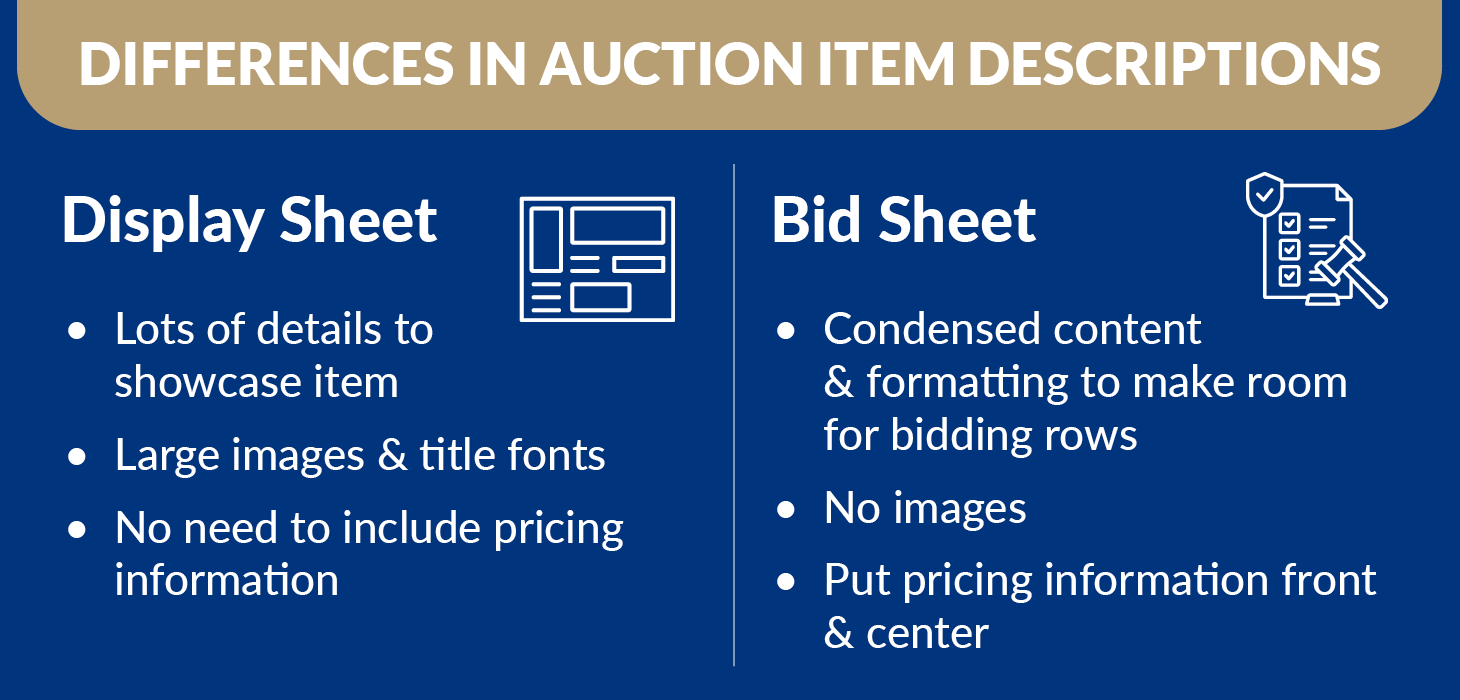
Display sheet item descriptions can feature more details than bid sheets and should use large images and fonts for item titles so they’re visible from a distance. You also don’t need to include pricing information on this sheet, although you can put the FMV at the bottom if you want to share it.
On bid sheets, your item descriptions should be more condensed in content and format to make room for bidding rows. You often won’t have room for images, but pricing information should be featured front and center. Make sure to still list the contents of bundles and any restrictions on item usage to reinforce these important details, though.
How do you write an effective silent auction item description?
For both display sheet and bid sheet silent auction item descriptions, some writing best practices to keep in mind include:
- Making descriptions skimmable by keeping paragraphs short, using bullet points where possible, and sticking to a maximum of 200 words per prize.
- Keeping your writing style and tone consistent for every item, since messaging is part of your organization’s brand.
- Putting yourself in your supporters’ shoes—i.e., thinking about what they’d want to know about an item before they bid.
While this isn’t strictly part of an item description, it’s also customary to acknowledge each item’s provider on your display and/or bid sheets. This recognition can be as simple as a line of copy that reads “This item was provided by [individual or organization name]” and the provider’s logo if you received the prize from a corporate sponsor. In addition to kickstarting your stewardship of auction item providers, this approach also gives sponsors free publicity, which is often a reciprocal aspect of event sponsorship agreements.
Essential Elements of a Silent Auction Item Description
To strike the right balance between making silent auction item descriptions engaging and keeping them concise, focus on the following four elements as you write.
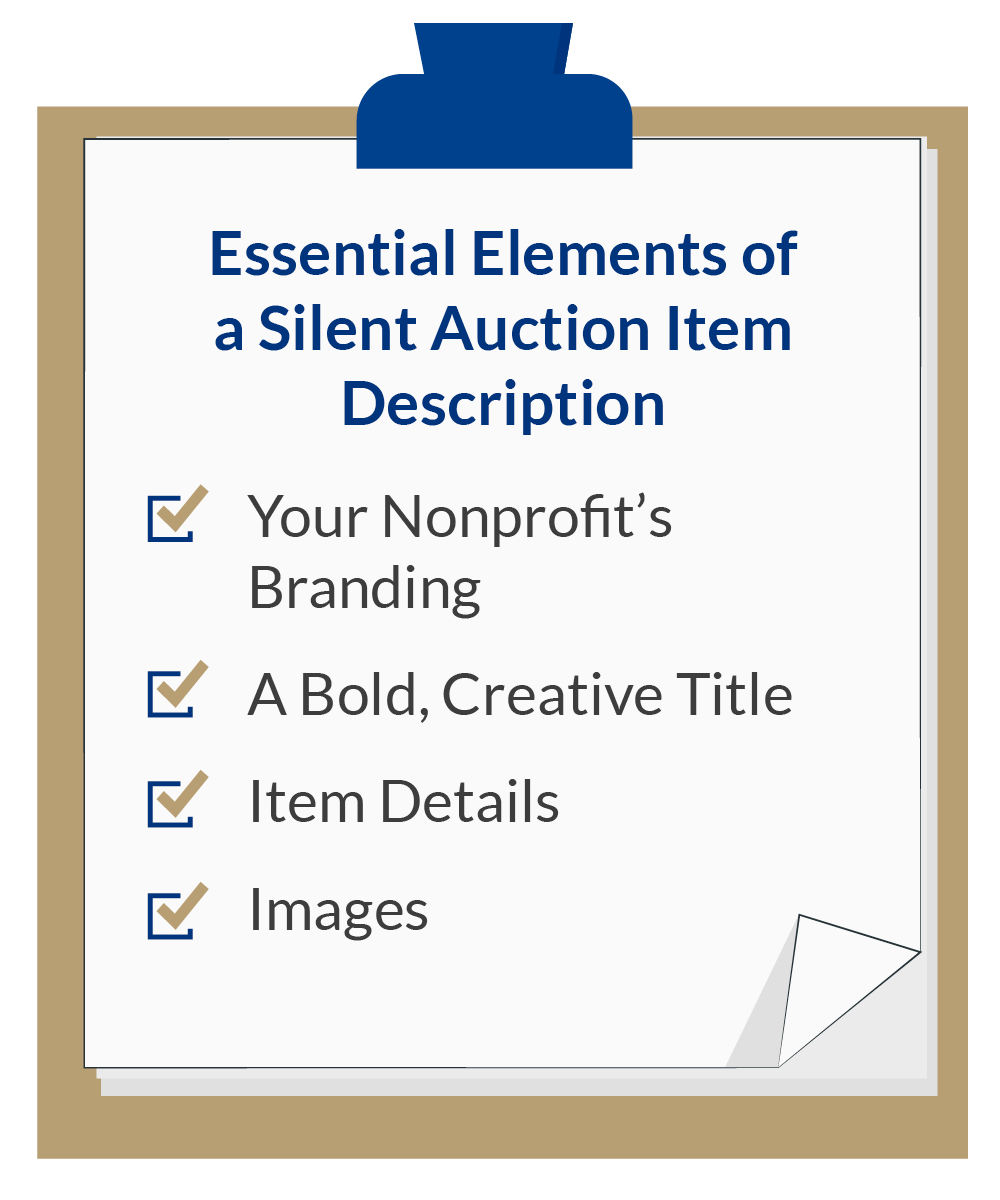
Your Nonprofit’s Branding
Consistent branding gives your item descriptions a professional look and feel and helps new supporters get familiar with your brand throughout your event. In addition to maintaining the same messaging standards across all descriptions, configure your description template so it includes key brand aspects, such as your nonprofit’s:
- Name
- Tagline
- Logo
- Color scheme
- Typography
While your organization’s branding should reinforce its mission, you might also include a slightly longer version of your mission statement or a brief note about how you plan to use the funds from the auction under your name, tagline, and logo. This way, everyone will clearly understand your event’s purpose and may be motivated to place more bids.
A Bold, Creative Title
When coming up with names for your auction items, put yourself in your supporters’ shoes. If you were attending your auction, which of these prizes would you be more likely to bid on?
- The “Board Game Package” or the “Game Nights Rule! Gift Basket”?
- “Two Tickets to a Beyoncé Concert” or “The Cowboy Carter Tour VIP Experience”?
- “3-Night Vacation in Los Angeles” or “Lights, Camera, Action! Hollywood Adventure”?
Chances are, the second title in each pair would draw you in and make you excited to bid. Especially for valuable, unique prizes, make your titles as creative as possible to pique participants’ interest, and use a large, bold font so they’re noticeable.
If you need help brainstorming titles for your auction items, use the generator below to get started!
Item Details
This section will be the bulk of each silent auction item description. In it, make sure to list the following details about each item:
- Everything the winning bidder will receive, which is particularly important for gift baskets and other bundled prizes.
- Any restrictions on the item’s use (e.g., if a vacation has to be taken during a certain time frame or a restaurant gift certificate is only valid at one of its multiple locations) to ensure winners can get the full value from their prizes.
- Pricing information so bidders know the starting bid amount, minimum bid increase, and “Buy Now” price (if applicable for high-value prizes). Some organizations like to list fair market values (FMVs) for tax deduction purposes, while others omit them to avoid creating a cap for bidding, so it’s up to you whether you want to share each item’s FMV.
When you request auction items as in-kind donations or purchase them on consignment, ask providers to share details about their prizes and explain any useful pricing information. Since your team will need to write individual descriptions for 100 or more items, getting providers to lay the foundations can save lots of time.
Images
They say a picture is worth a thousand words, and that cliché rings true for auction items. Just like with our online shopping example, participants want to see what they’ll win before they bid, especially if you’re hosting a virtual auction or if you can’t place an item on the table at an in-person event because it’s intangible (i.e., an experience) or risky to leave out (i.e., a gift card).
For the latter item types, you’ll need to use photos related to the prize rather than images of the prizes themselves. Here are a few ideas to get you started:
- Iconic sights or landscape pictures from the destination for a vacation package.
- Window cards for concerts or musicals you’re auctioning off tickets to.
- Photos of a restaurant’s signature dishes that a winning bidder might purchase with their gift certificate.
If you take a photo of a physical item for a virtual catalog or to help match the prize to the correct display, position it against a solid-color background and ensure the photo looks as professional as possible in its lighting, framing, etc.
Winspire’s Silent Auction Item Description Template
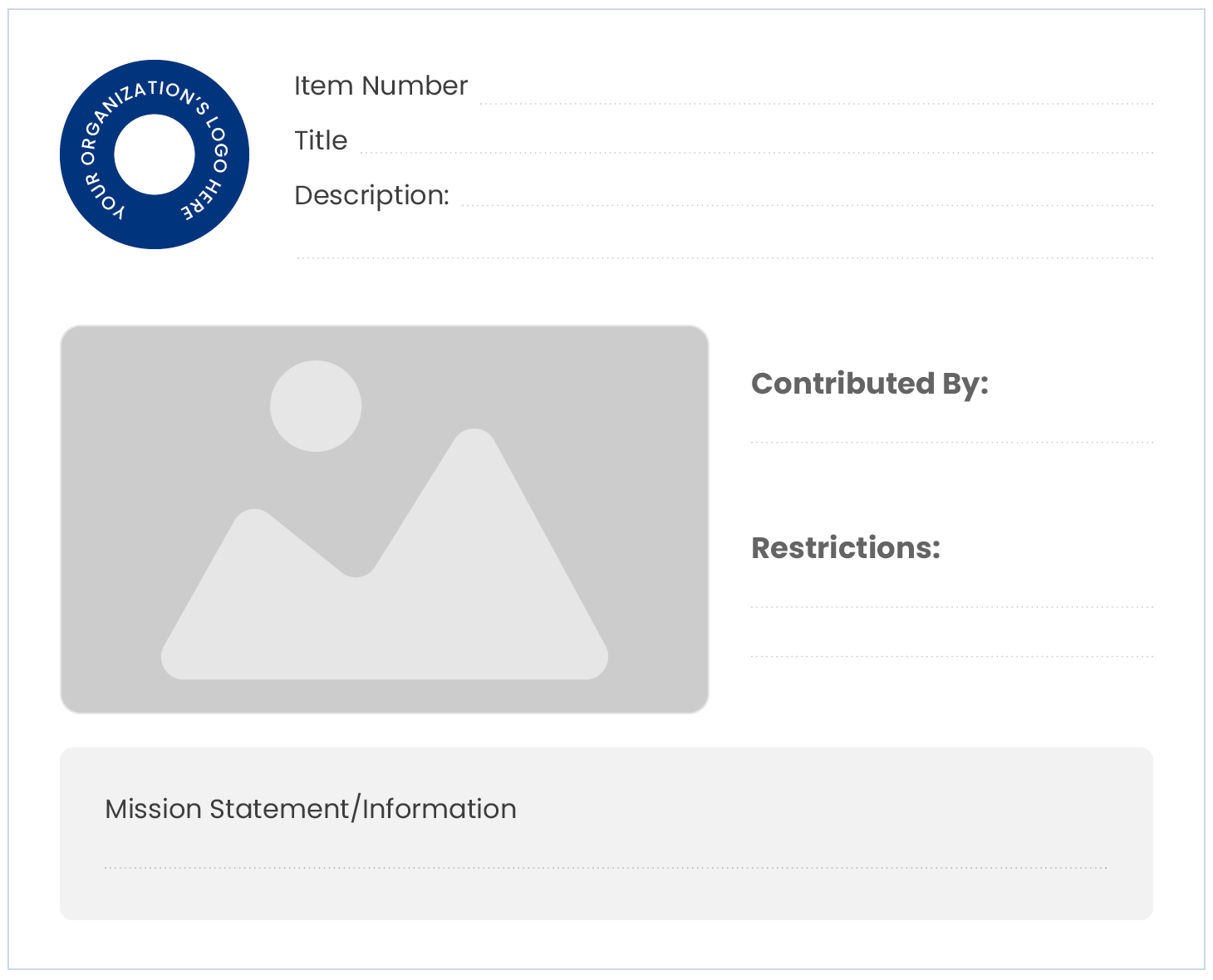
To make it easy to create professional-looking, consistent display sheets with thorough item descriptions, here is a template you can adapt for your nonprofit’s needs:
While we love creating fundraising resources like this at Winspire, our specialty is providing bucket-list travel packages (known as Experiences) as nonprofit auction and raffle prizes. Each Experience is risk-free to use because you only pay for what you sell at your event, and every dollar you earn above the Nonprofit Cost (list price) goes directly to your mission. We’ll also send you a description of each package you choose and photos for your display sheets—we want to make the process as easy as possible for you!
Wrapping Up: Additional Resources on Silent Auctions
Silent auction item descriptions can make or break whether supporters want to purchase your highest-value prizes. With the tips and template in this guide on your side, you should be well-equipped to write descriptions that encourage competitive bidding and help you reach your revenue goals.
For more information on planning and executing silent auctions, check out these resources:
- Silent Auction Donation Request Letters: Guide + Templates. Discover tips for creating another essential type of silent auction document: donation request letters.
- The Ultimate List of 100+ Silent Auction Item Ideas for 2026. Explore ideas for prizes to include in your silent auction that appeal to a wide range of audience preferences and budgets.
- How to Develop Effective Silent Auction Rules + Template. Learn how to set and enforce rules at your silent auction that promote fairness and efficiency.


David White – Director of Nonprofit Sales at Winspire
David White is the Director of Nonprofit Sales at Winspire, a consignment auction item provider dedicated to supporting the nonprofit community by providing the best service and unique vacation experiences for their events. With a decade of experience in the nonprofit industry, David specializes in fundraising technology and consulting, providing nonprofits with the tools and resources necessary to elevate their fundraising efforts.