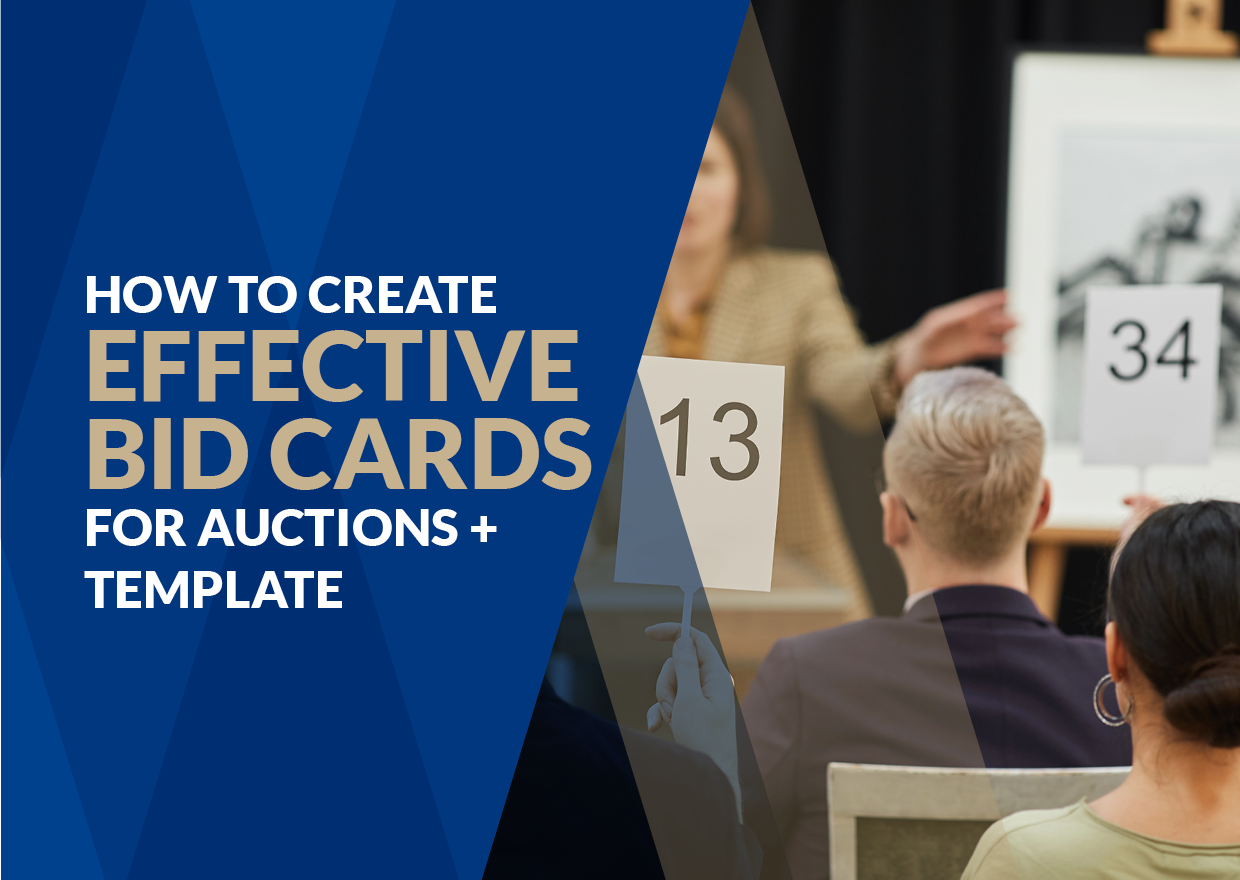
The appeal of participating in a nonprofit live auction comes from two key aspects of the event’s structure: the valuable, attention-grabbing prizes supporters can win and the competitive, fast-paced bidding process that keeps them engaged from start to finish. However, if you’re just having participants raise their hands to bid, it can be difficult for your auctioneer to keep track of who is bidding on each item—which is where bid cards come into play.
As an individualized, easier-to-create version of the live auction paddles of the past, bid cards enhance the live auction experience for supporters and streamline event management for your team. In this guide, you’ll learn everything you need to know to design effective bid cards for your nonprofit’s next auction, including:
- What is a bid card for auctions?
- Essential Elements of an Auction Bid Card
- Winspire’s Auction Bid Card Template
Before we get to the template that our team at Winspire has created to help you design your bid cards, let’s begin by discussing what these tools are and their role in the overall auction landscape.

What is a bid card for auctions?
At its most basic level, a bid card is a piece of paper that a live auction participant raises to indicate that they want to bid on the prize being shown. It identifies the supporter as a registered bidder and helps the auctioneer confirm that they are bidding. (Without bid cards, auctioneers can easily misconstrue supporters’ stretching or shifting positions in their seats as a desire to bid and may accidentally take bids from unregistered individuals.)
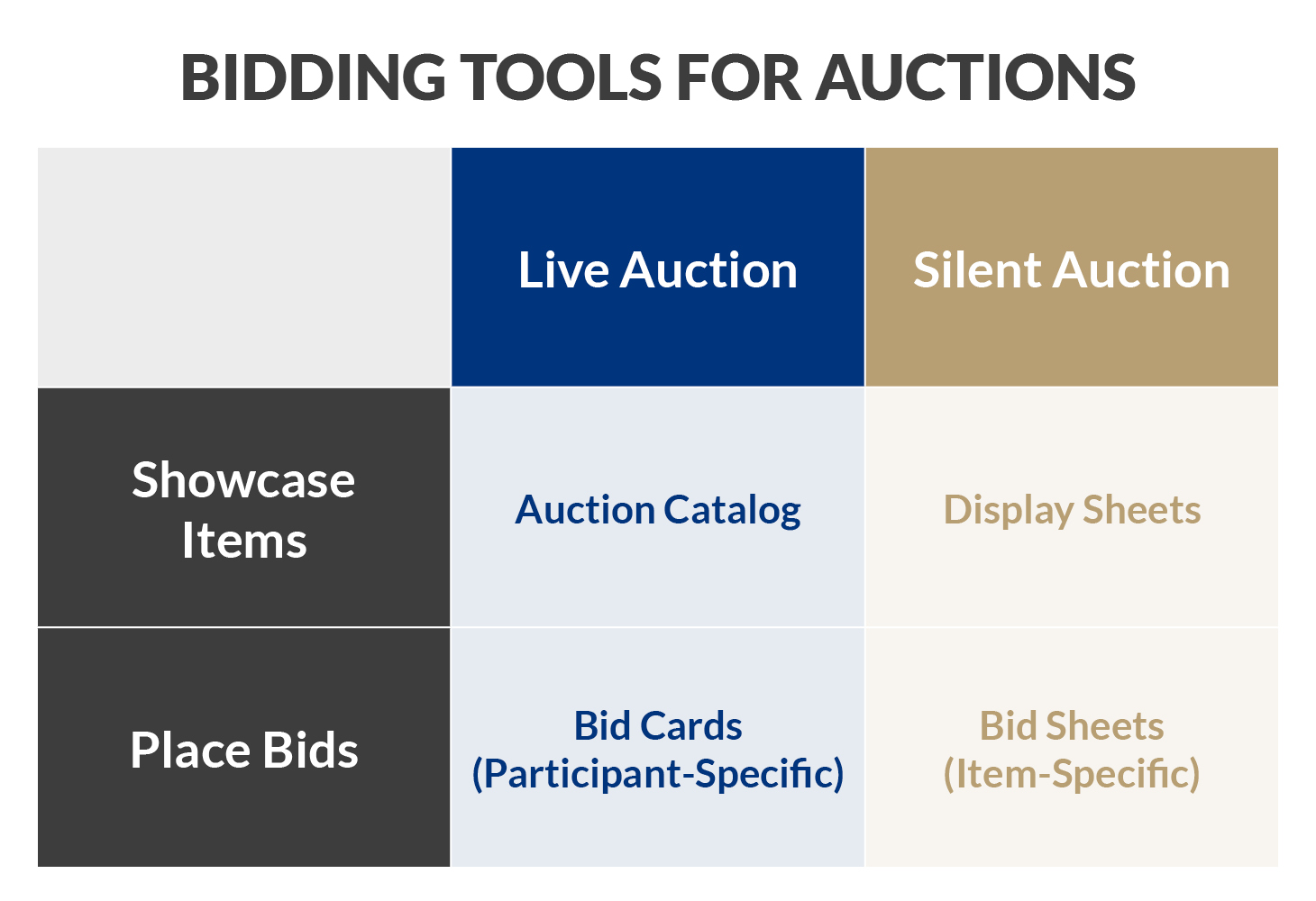
Bid cards are one of two essential bidding tools you’ll need to provide for each live auction participant. The other is an auction catalog, which lists essential details about every item up for bid so supporters can make informed decisions about what prizes they want to raise their bid cards for.
The silent auction equivalent of a bid card is a bid sheet (the tool used for actually placing bids, although they’re item-specific rather than participant-specific), and live auction catalog entries are equivalent to silent auction display sheets (the tool that showcases the available prizes).
Essential Elements of an Auction Bid Card
As with many graphic design projects, creating an effective bid card for auctions requires balancing thoughtful content with streamlined, professional-looking formatting. Let’s walk through both sides of this proposition in more detail.
Content
Although it’s tempting to fill bid cards with lots of information, you only have so much space on each card, and you don’t want to overwhelm bidders. So, you’ll need to maximize the area you have by including only the most useful content on your bid cards and saving any other details for your auction catalog.
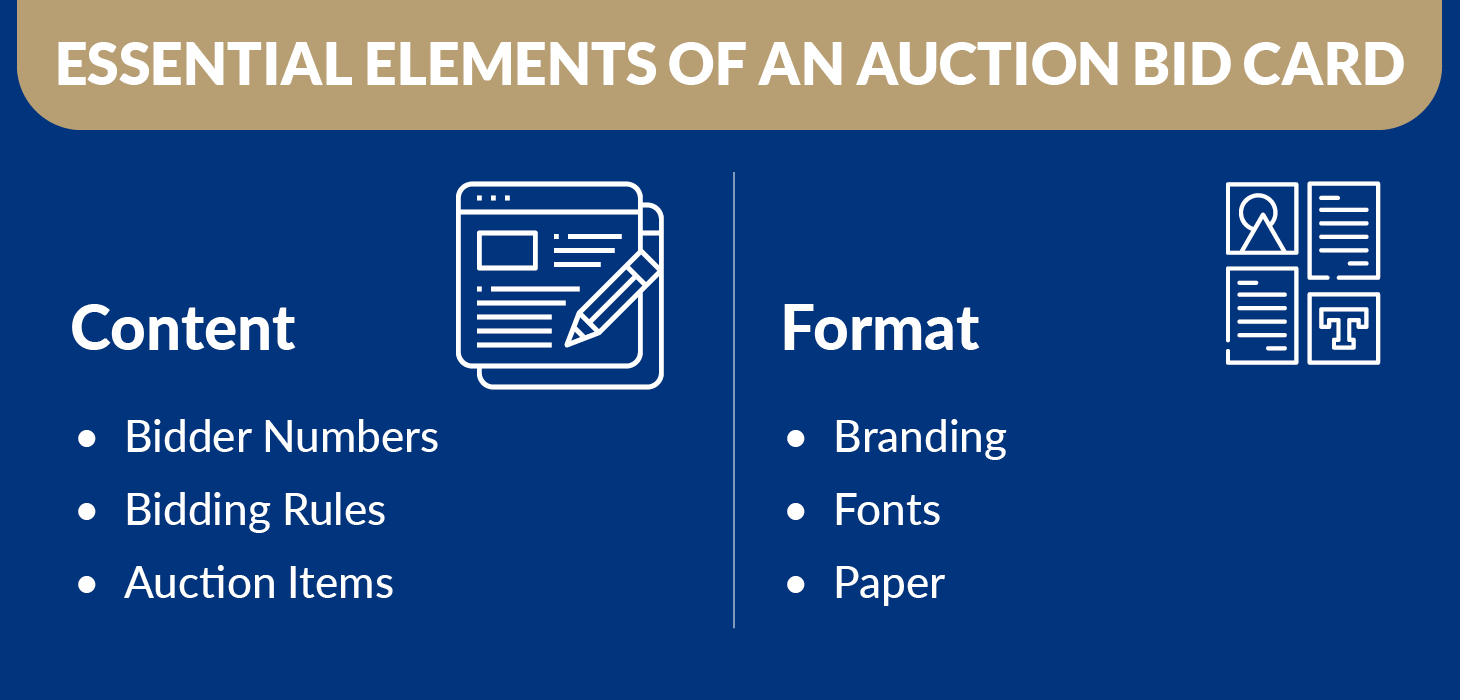
The three pieces of information you definitely need to include on each bid card are:
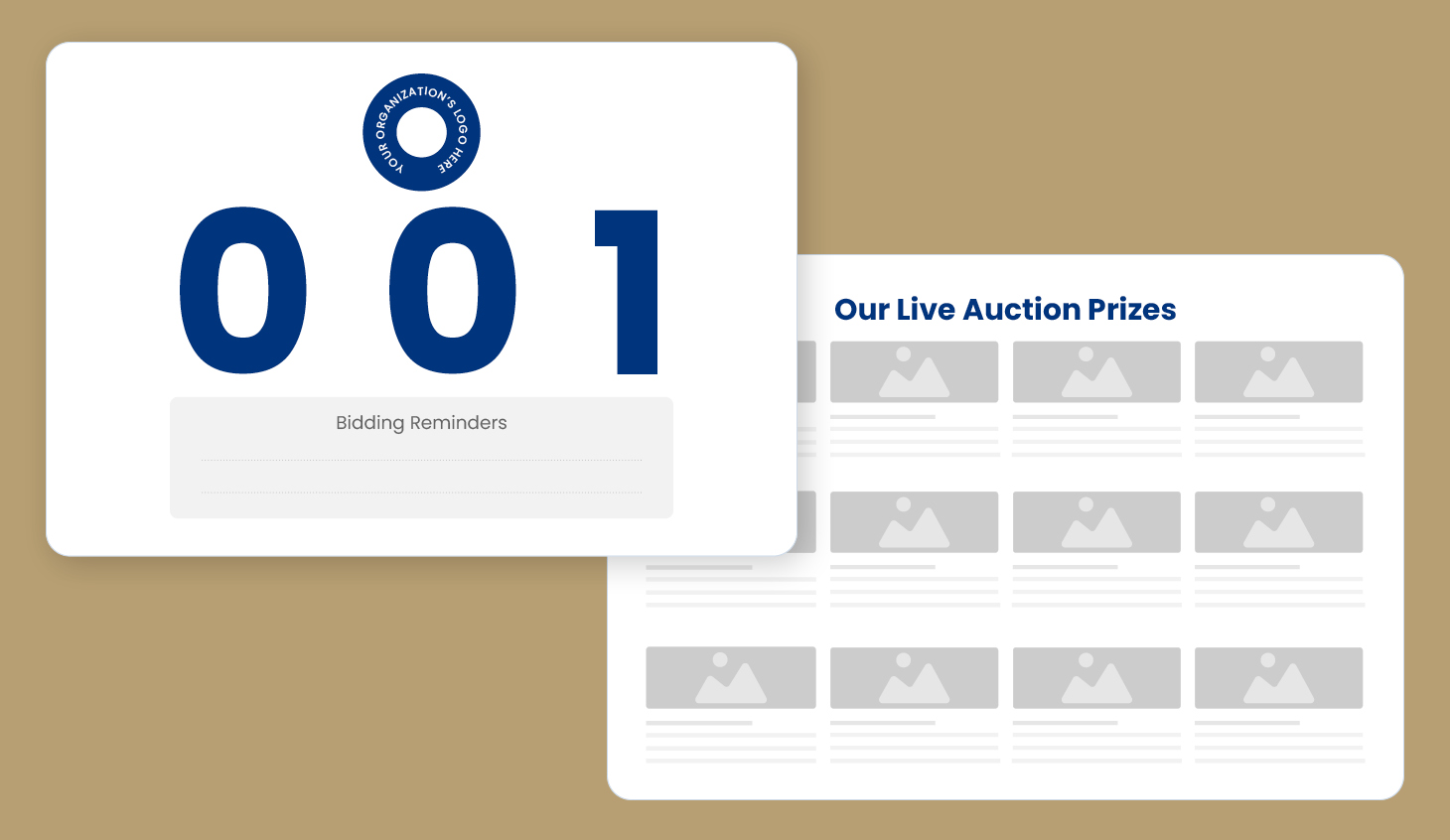
- Bidder numbers. Assigning each participant a number helps your team keep track of who is bidding at any given time and who wins each item. You can pre-assign numbers and add supporters’ names to their bid cards before the event, or you might simply hand the top card in your stack to each bidder as they check in. Either way, remember to record each participant’s number in a spreadsheet or your event software before the auction begins.
- Bidding rules. Participants should agree to your full list of auction rules when they register, and the rules should also feature in your auction catalog. However, it’s helpful for supporters to have a cheat sheet of a few rules they need to know during the event (what time the auction begins, what counts as a legitimate bid, the fact that all auction item sales are final, etc.). Write these out under the bidder number on each card so participants can refresh their memory.
- Auction items. The back of your bid cards should list the prizes up for grabs in your live auction for easy reference. Because live auctions should generally only feature 12-15 items, you should be able to fit all of them on the card. Include each item’s name, a very brief description of it (stick to one or two sentences—you’ll provide more information in your auction catalog listings), and a small, relevant photo or blurb about the item’s contributor if you have space.
While you can include more information if you want (e.g., fiscal event sponsor logos or your nonprofit’s tax ID number for charitable deduction purposes), concision is the name of the game with bid cards. Generally speaking, they should be a quick-reference supplement to the more detailed information in your auction catalog.
Format
When formatting your bid cards, you’ll want to give them a professional look and feel while neatly laying out all of the information listed above. This approach will engage the most bidders, especially those you most need to build trust with through your event—i.e., individuals who are new to your nonprofit or who could become major contributors.
Here are the top formatting factors you should consider when designing auction bid cards:
- Branding. Include your nonprofit’s logo in a corner of the front of each bid card to reinforce brand awareness and remind supporters why they’re ultimately participating in this auction: to raise money for your mission. Additionally, incorporate your brand colors where possible, always ensuring adequate contrast for readability. Dark text on a light background is generally easiest to read from a distance, so use that technique for the front side (at least) so your team can clearly see bidder numbers during the auction.
- Fonts. Although you should also use your organization’s brand fonts whenever possible on your bid cards for consistency, make sure bidder numbers are printed in the boldest possible typeface. Depending on how far your audience is from your auctioneer and how much other information you want to include on the front of the card, use a font size between 216pt and 360pt for the numbers, which will make them three to five inches tall.
- Paper. Heavy cardstock tends to work best for bid cards to prevent damage before or during your auction. To make printing dozens or even hundreds of bid cards more eco-friendly, look for cardstock made from recycled paper that’s still high-quality and fits into your event budget. Additionally, place a paper recycling bin near the exit to encourage participants who don’t want to keep their bid cards to recycle them.
Even though some supporters may choose the recycling option for their bid cards, putting thought and effort into your design will make them a great souvenir of your event for other participants, especially if they don’t win an item to take home.
Winspire’s Auction Bid Card Template
Your bid cards will benefit from a professional look and feel, but there is no need to invest in design services to achieve this! Taking a DIY approach with a downloadable template works just as well and is much more cost-effective.
This is why our team at Winspire has created a bid card template you can download here for free! We included a variety of content fields and formatting options, but you can easily edit the template to include only the information you want and incorporate your branding.
If your organization is still looking for high-value items that will get live auction participants to raise their bid cards, Winspire has you covered there, too! In fact, our main purpose for more than 15 years has been to build and sell bucket-list travel packages specifically designed to be used as prizes in fundraising auctions and raffles.
With more than 200 vacations (also known as Experiences) to choose from, it’s easy to find options that appeal to your unique audience. Plus, Winspire’s consignment model makes our Experiences risk-free to use—you’ll only pay for what you sell, and every dollar you raise above the Nonprofit Cost (list price) goes directly to your mission. We’ll even help you promote and display your chosen Experiences and take care of booking logistics for winning bidders, since your team already has enough on their plates when you’re hosting a live auction.
Wrapping Up: Additional Resources on Live Auction Planning
Bid cards are both more important to your live auction’s success and simpler to create than you might think. With the tips above in mind and a template created by our fundraising event experts at Winspire, you’ll be well on your way to designing an essential auction tool, bidding cheat sheet, promotional resource, and participant souvenir all in one!
For more information on planning live auctions, check out these resources:
- How to Plan an Auction Fundraiser in 10 Simple Steps. Explore the entire process of running a successful auction fundraising event, from logistics to promotion to follow-ups.
- Setting Starting Bids for Nonprofit Live Auctions: FAQ Guide. Learn how to price live auction items to balance appealing to participants with maximizing fundraising potential.
- Top 10 Types of Charity Auction Items + Tips to Procure Them. Discover the categories of auction prizes that supporters will be most likely to raise their bid cards for.


David White – Director of Nonprofit Sales at Winspire
David White is the Director of Nonprofit Sales at Winspire, a consignment auction item provider dedicated to supporting the nonprofit community by providing the best service and unique vacation experiences for their events. With a decade of experience in the nonprofit industry, David specializes in fundraising technology and consulting, providing nonprofits with the tools and resources necessary to elevate their fundraising efforts.