If your nonprofit has hosted an auction (live or silent) before, you’ve probably noticed how competitive bidding for valuable, attention-grabbing prizes makes this event unforgettable for supporters. However, it’s unwise to let auction participants enter into bidding wars without first establishing some rules of engagement.
So, in this guide, you’ll learn everything you need to know to develop silent auction rules that keep your event running smoothly while still making it fun for your supporters. Here is what we’ll cover:
- Silent Auction Rules FAQ
- Categories of Silent Auction Rules
- Silent Auction Rule Sheet Example & Template
Before we dive into what silent auction rules to implement, let’s begin by contextualizing these guidelines within the event planning process.

Silent Auction Rules: Frequently Asked Questions
What are silent auction rules?
Silent auction rules are the guidelines your nonprofit uses to govern procedure and conduct when hosting this type of event. They help your auction run smoothly and remain fair for all participants while ensuring your organization receives the revenue it’s owed and isn’t held liable for common issues that occur during these events.
Why are silent auction rules important?
The core purpose of silent auction rules is similar to that of the rules for sports or board games: to promote fairness in a competition. Participants want to know that they all have an equal opportunity to bid on their favorite items and that the winners aren’t chosen based on any kind of favoritism on your nonprofit’s part.
By developing the right rules for your silent auction, your organization can also experience these benefits:
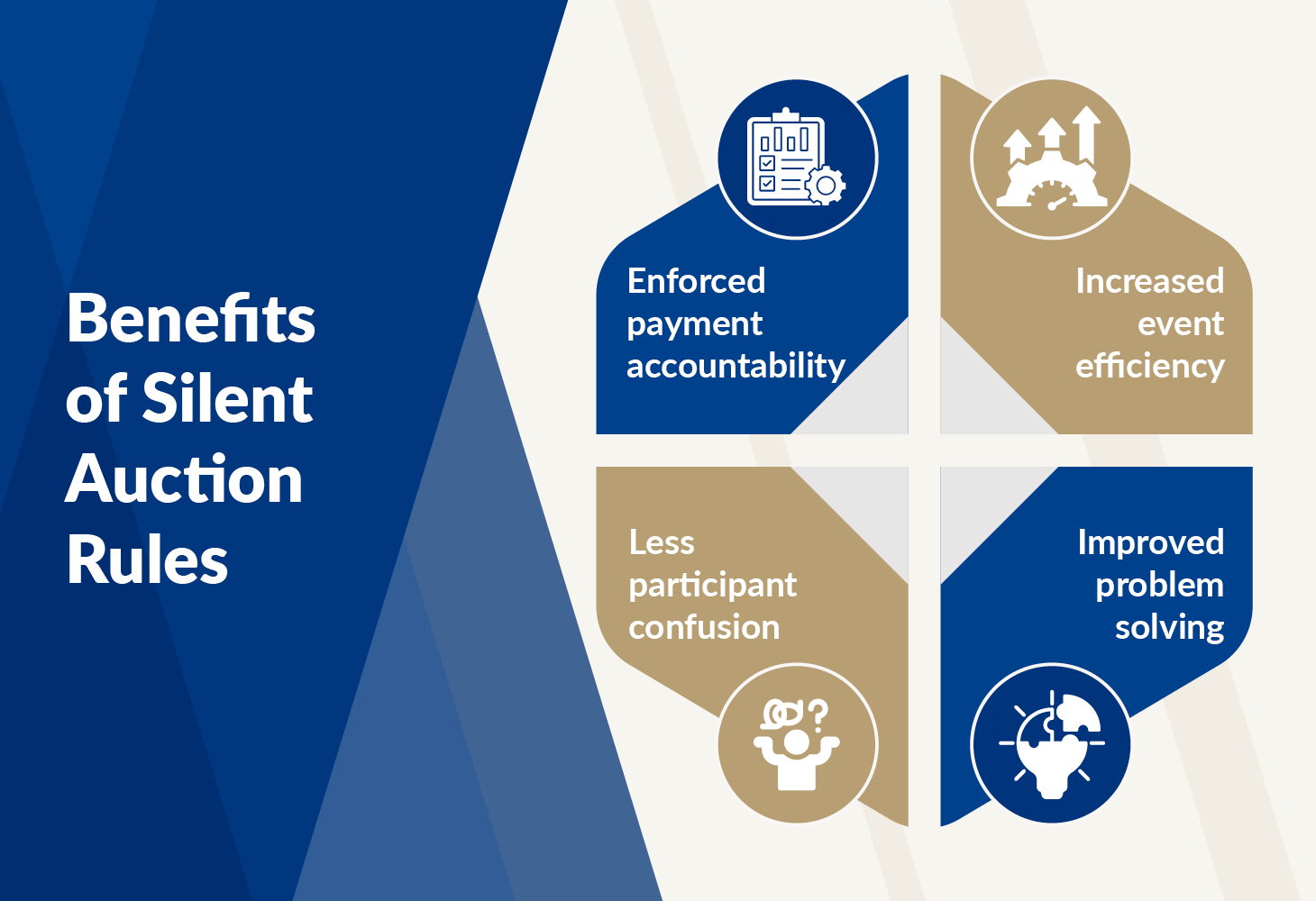
- Increased event efficiency. Your auction is more likely to start and end on time and have a faster checkout process if you create guidelines for these event aspects in advance.
- Improved problem-solving. If a dispute arises between supporters during your auction, you’ll have an official document to help you determine a solution and back up your final decision.
- Less participant confusion. Clear rules can also serve as a reference for supporters if they don’t know how a silent auction works or if any misunderstandings occur with other participants, meaning you can answer some questions before they turn into disputes.
- Enforced payment accountability. Payment guidelines prompt winning bidders to pay the agreed-upon amount for the items they said they would in a timely manner, ensuring you receive the fundraising revenue you were promised.
When you set rules that allow all of these aspects of your silent auction to go off without a hitch, your nonprofit will appear trustworthy and professional. This boosts your reputation and encourages supporters to attend more of your events in the future.
Besides establishing rules, how can my nonprofit run a successful silent auction?
Clearly stated rules aren’t the only factor that can make or break your nonprofit’s silent auction. Here are some additional best practices to help take your event to the next level:
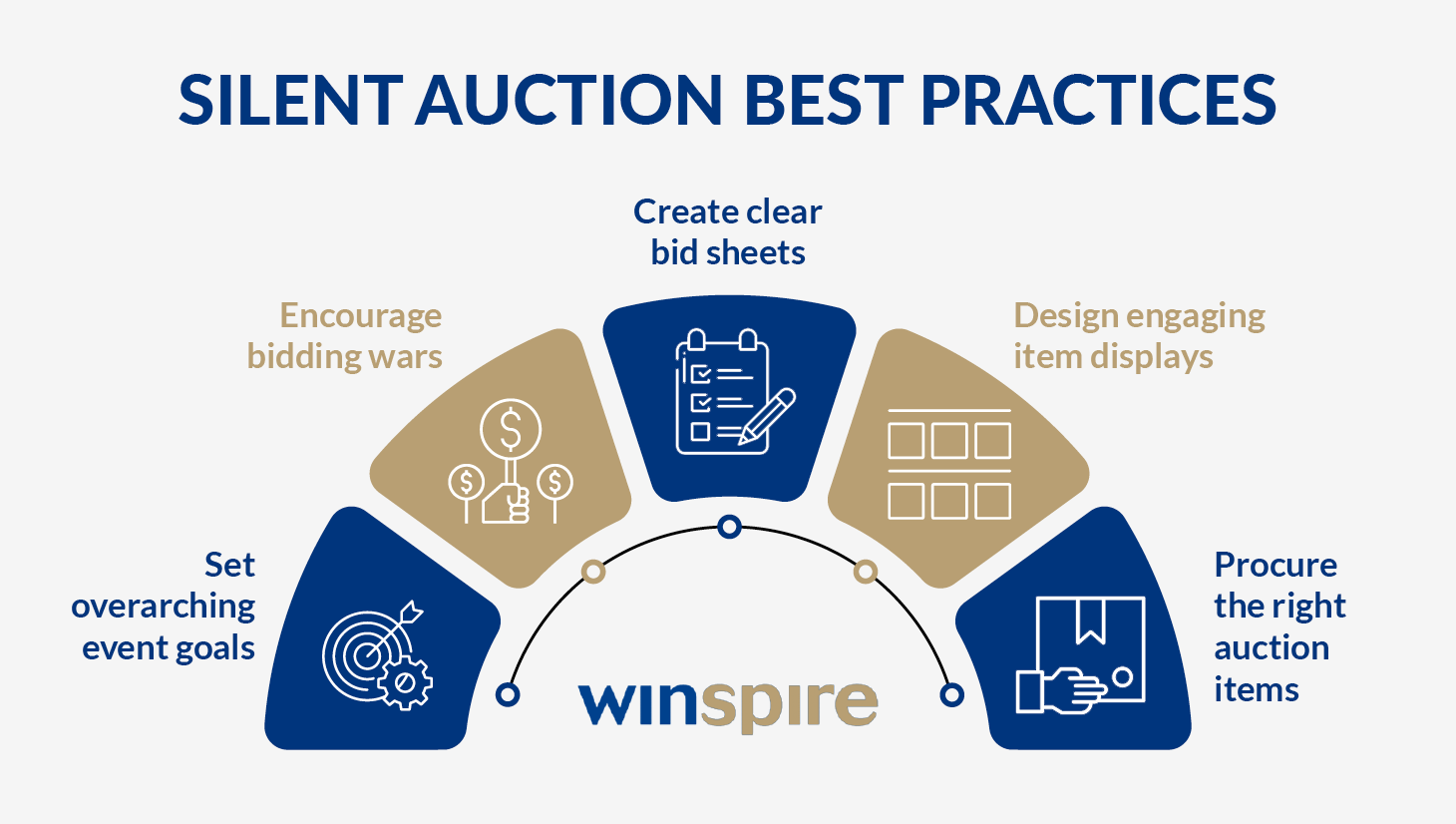
- Set overarching event goals. In addition to establishing a target for the amount of money you’d like to raise through your silent auction, you may also create goals that deal with total participation, supporter acquisition and retention, satisfaction ratings, or item sales. These objectives should guide your team throughout the planning process, including rule development.
- Encourage bidding wars. While rules are important to keep your auction civil, that doesn’t mean you can’t promote friendly competition! In fact, encouraging bidding wars by setting low minimum increases and keeping your mission top of mind throughout the event can boost your revenue totals and make the event environment electric. For virtual auctions, sending real-time bid updates through your event fundraising software can prompt additional engagement.
- Create clear bid sheets. Including starting bid amounts, item restrictions, and a separate column for each piece of information supporters have to enter for their bid to be valid helps enforce bidding rules. Encourage interaction with your bid sheets by adding a thorough but concise description of each item and a creative title that will grab participants’ attention.
- Design engaging item displays. For items that will sit on in-person auction tables, make sure they’re packaged in an attractive way. If a prize is experience-based or shouldn’t be left lying around (like gift certificates or concert tickets), design a display sheet with photos that demonstrate the benefits of winning that item. Photos are also helpful for drawing attention to virtual silent auction item listings.
- Procure the right auction items. Look for a wide variety of items that will appeal to your event’s target audience. For example, if many potential auction participants have young children or grandchildren, feature family-friendly prizes like amusement park tickets or birthday party packages. To keep upfront costs low, try to secure as many items via nonprofit discounts, in-kind gifts, or consignment travel providers (like Winspire!) as possible.
Auction preparation should be a team effort and start well before your event—in fact, if you plan to host a silent auction annually, you can start reviewing data and setting goals for your next event right after the previous one ends!

Categories of Silent Auction Rules
Now that you’ve gotten the lay of the land, we’ve broken down the most popular silent auction rules into five basic categories so you can start creating your own guidelines for your nonprofit’s next event!
Note: These rules apply primarily to in-person, standalone silent auctions. You’ll need to adapt some guidelines for mobile bidding if your event is virtual or hybrid, and create a second set of rules if you host a silent auction and live auction during the same event.
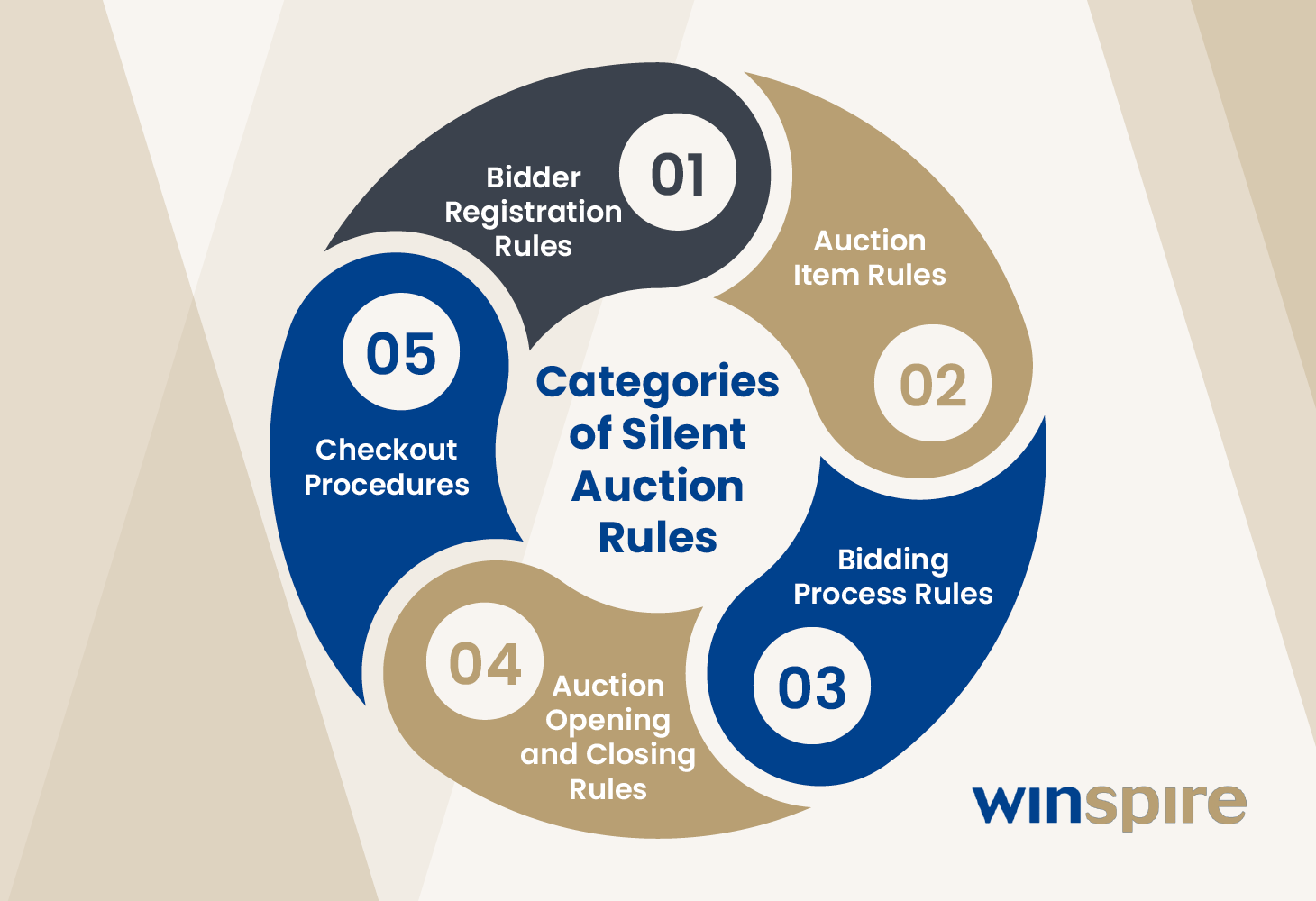
Bidder Registration Rules
Start your silent auction off on the right foot by establishing guidelines for what will happen right after participants walk through the door. Here are some examples of bidder registration rules:
- Only supporters who have purchased an event ticket may bid in the silent auction.
- Participants must read and sign a copy of the rules upon registering for the auction.
- Pre-registered participants must check in with an event volunteer before they start bidding.
These rules promote fairness in terms of who gets to participate in your silent auction. Plus, they ensure that everyone agrees to the rules in advance, reducing the overall number of rule-breaking incidents and holding participants accountable if they violate a guideline.
Auction Item Rules
Guidelines that specifically relate to your silent auction items protect your nonprofit from various liabilities that may come up with item providers and auction participants. These may include:
- The right of your organization and third-party providers to add or withdraw items at will up until the auction opens
- The fact that all item sales are final and no refunds will be given to winning bidders (unless an issue arises as a third-party provider is fulfilling a prize, in which case refunds may be distributed at that provider’s discretion)
- The ability to specify limitations on individual items’ use—for example, stating that a vacation needs to be taken during a certain time frame or that the winners of prizes directly involving alcohol must be at least 21 years old.
Since listing out every limitation on each prize takes up a lot of space, only add general item-related rules to your official rule sheet, and include a clause that the “fine print” on all of your bid sheets (where you’ll include specific limitations for each prize) has to be honored.
Bidding Process Rules
Bidding process rules help keep the peace among participants during your silent auction. When establishing your event guidelines, you should consider:
- What information (name, contact details, etc.) supporters need to include on a bid sheet for their bid to be valid
- Whether participants can change or withdraw their bids after they’ve been placed
- What to do in the event that an item’s winning bid is a tie
Item pricing also falls into this category of silent auction rules and should be treated similarly to individual prize limitations. Designate a starting bid amount, minimum bid increase, and Buy Now price (if applicable) for each item on its unique bid sheet. Then, add a general clause to your rule sheet that pricing specifications apply as listed.
Auction Opening and Closing Rules
This category of silent auction rules is also important for maintaining decorum, besides helping ensure the event runs efficiently and that winning bidders are chosen properly. In addition to specifying an opening and closing time for bidding, consider implementing these guidelines:
- The highest qualified bid (complete and otherwise in accordance with your event rules) wins the item.
- Bids placed before the official opening time or after the official closing time are considered invalid.
- Event volunteers must give five-minute warnings before bidding opens and closes.
When your silent auction is about to close, ensure your volunteers and staff are prepared, as closing is the time when disputes between participants are most likely to occur. During your pre-event training, teach everyone the best procedures for resolving conflicts and which auction rules are best to refer back to in these situations.
Checkout Procedures
Participants’ silent auction experience doesn’t end when the closing bell rings, and neither should your guidelines. It’s essential to establish clear checkout procedures so that winning bidders will claim and pay for all of their items. Make sure to specify:
- Where and when winning bidders should pick up and pay for their items
- What payment methods you’ll accept (and whether you require that payment method to be put on file before the auction begins)
- Who is responsible for making arrangements to use certain prizes, such as booking vacations or coordinating services
- Whether receipts for auction items can be used for tax deductibility purposes
Additionally, note that if items aren’t claimed by the time stated in the rules, they no longer belong to the winning bidder. Depending on your organization’s agreement with the item provider, you’ll either have to return the item to them or it’ll become your property that you can sell in a different auction or raffle.
Silent Auction Rule Sheet Example & Template
To help you get started with creating your silent auction rules, we’ve compiled the most essential guidelines from the section above into a helpful sample rule sheet. Use this phrasing as a starting point, but don’t hesitate to add, remove, or modify rules as you see fit for your nonprofit.
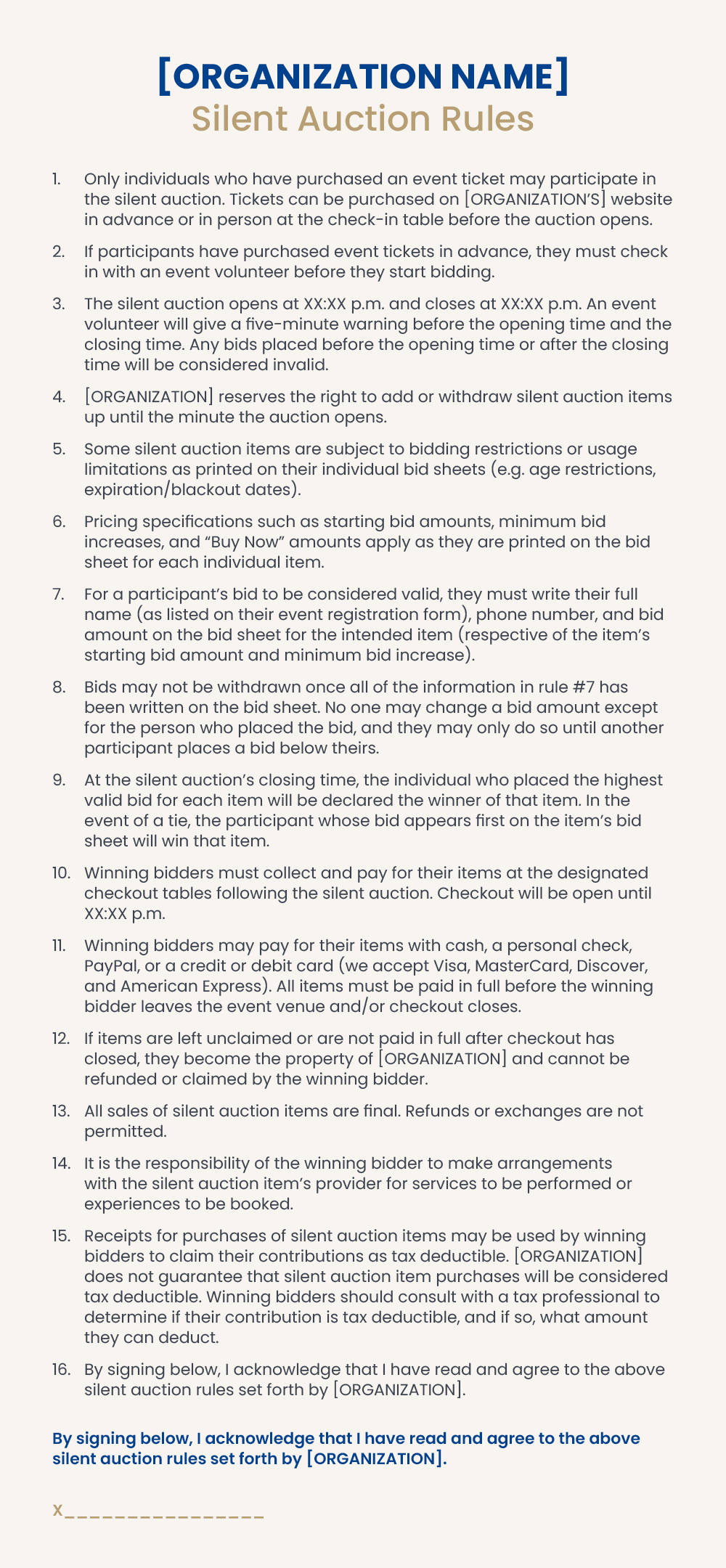
We’ve also put together an interactive template so you can write out your guidelines here, then print the completed rule sheet or save it as a PDF.
And if you’re still struggling with procuring items for your silent auction, Winspire can help with that, too! Winspire curates bucket-list vacation packages (also known as Experiences) that are specifically designed to be used as auction and raffle prizes. All Experiences are risk-free because you only pay for what you sell, and every dollar you raise above a package’s Nonprofit Cost (list price) goes directly to your mission. Since Winspire’s founding in 2008, we’ve helped nonprofits across North America raise more than $110 million for good causes!
Wrapping Up: Additional Resources on Silent Auction Rules
Although rules sometimes get a bad rap, they’re essential for making your silent auction run efficiently, minimizing conflicts, and reducing risks for your organization. Use the categories and sample rule sheet above to get started, and make sure to view your guidelines in light of the rest of your auction planning to set your event up for success.
For more information on silent auction rules, check out these resources:
- How to Design a Silent Auction Bid Sheet: Tips + Template. Learn more about creating bid sheets that encourage engagement while supporting your silent auction rules.
- The Best Types of Charity Auction Items + Tips to Procure Them. Discover the best prizes to generate bids at your silent auction (when accompanied by clear rules).
- How to Procure Auction Items: A Step-by-Step Success Guide. Explore the steps of auction prize procurement to inform the guidelines you set that affect item providers.


Jason Champion – Vice President of National Accounts at Winspire
Jason Champion is the Vice President of National Partnerships at Winspire, a global provider of bucket-list vacation experiences for charity auctions and fundraisers. He is responsible for overseeing and managing relationships with major clients and partners across the country, which involves developing and executing strategic plans to drive revenue growth, expand market share, and ensure client satisfaction. Jason also collaborates closely with Winspire team members in sales, marketing, and other relevant departments to align business objectives with customer needs.
