If your nonprofit is planning an auction fundraising event, the most involved part of the process will likely be procuring items to feature in your lineup. While finding the best prizes is your procurement team’s top priority, how you procure items is just as important as what those items are. You should go into procurement with the intention of efficiently building a full slate of prizes that appeal to your auction participants while minimizing risk and maximizing fundraising potential.
To help your nonprofit balance all of these factors, this guide will break down the process of how to procure auction items into the following five steps:
- Finalize Overarching Goals & Logistics
- Brainstorm Your Auction Item Wishlist
- Create Your Sourcing Strategy
- Build Auction Item Procurement Packets
- Track Item Procurement Progress
Auction item procurement may seem overwhelming, especially if this is your nonprofit’s first time hosting an auction. But by adapting these steps to your organization’s specific needs and situation, you can set your event up for success. Let’s get started!
1. Finalize Overarching Goals & Logistics
Although procuring items is an important step in organizing an auction, it’s just one part of the planning process. Many of the tasks you complete before you jump into procurement affect how you’ll approach that stage, such as:
- Setting an event fundraising goal. Your overall revenue target will influence the value of the prizes you need to procure. Calculate the funds you expect to raise from item sales, event tickets, and additional revenue streams like raffles and add-on donations to ensure you can meet your goal.
- Identifying your target audience. Your auction items should appeal to the specific supporters who come to your event, and one of the best ways to attract the individuals you most want to have in attendance is to procure prizes that would interest them.
- Choosing your auction format. This dictates how many items you need—live auctions should only feature 12-15 prizes at most to keep the event to a reasonable length, while silent auctions can include as many items as your team can secure (and they often have 100 or more).
- Assessing staffing needs. During this stage, you’ll decide which employees, board members, and volunteers working on your event have the bandwidth, skills, and interest to be part of your procurement team and whose time would be better spent on other activities.
As you complete these steps and start developing your procurement strategy, review any data you’ve collected from past auctions (if your nonprofit has hosted them) so you can make informed decisions.
2. Brainstorm Your Auction Item Wishlist
Once you’ve figured out event logistics and assembled your procurement team, you’ll need to decide which auction items you want to feature. Brainstorming often works best as a team, so call a meeting of everyone working on procurement and encourage them to share any and all prize ideas that come to mind.
While you should accept any possibilities at this stage, your team may need some inspiration to get the ball rolling. It might be useful to share the top 10 categories of charity auction items at the beginning of your meeting, which are as follows:
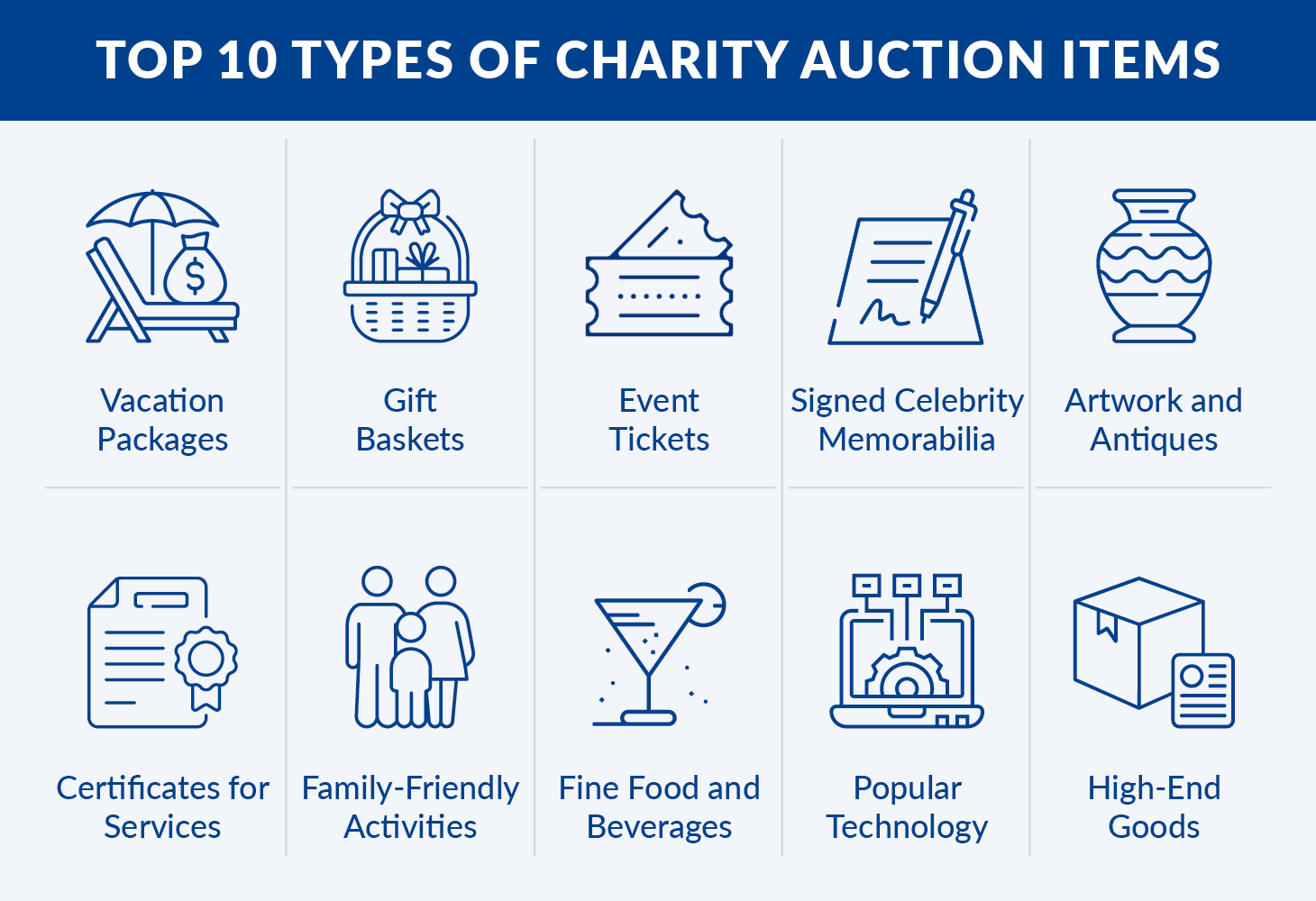
- Vacation packages that include transportation, accommodations, and activities specific to a dream destination for your supporters.
- Gift baskets constructed around creative themes where the bundle’s total value is greater than the sum of its component parts.
- Event tickets to concerts, musicals, or athletic competitions—the better the seats, the more bids you’ll get!
- Signed celebrity memorabilia, as long as the signature is legitimate and from an athlete or artist who resonates with participants.
- Artwork and antiques, especially locally made pieces that have an interesting story behind them.
- Certificates for services, which can range from dry cleaning to spa packages to home renovations.
- Family-friendly activities like amusement park passes or aquarium tickets—an especially important category if your target audience includes parents or grandparents.
- Fine food and beverages, whether they’re actual consumable products (e.g., craft beer samplers or gourmet chocolates) or food-related experiences (e.g., cooking classes or a dinner prepared by a celebrity chef).
- Popular technology such as video game systems, smart watches, eReaders, Bluetooth headphones, or even a new smartphone.
- High-end goods like jewelry, designer purses, crystal dishes, or trending kitchen appliances.
When your team has exhausted all of their ideas, narrow down your list to the most feasible items and divide them into categories based on whether you consider them must-haves, nice-to-haves, or backups that you’ll just procure if time permits or you can’t secure enough items from the first two groups.
3. Create Your Sourcing Strategy
For each of your must-have and nice-to-have auction items on your wishlist, you’ll need to make two decisions: who will be in charge of procuring that prize, and how they’ll go about doing so.
To divide up sourcing responsibilities, consider each team member’s skills and connections. For example, if you think it’ll take a lot of negotiating with your local performing arts center to secure season tickets to their musical lineup, you may put an employee who is good at negotiation in charge of procuring that item. Or, if one of your volunteers works at a pet store, they could ask their boss to donate some pet-themed gift baskets or a certificate for grooming services if the store offers them.
In terms of procurement methods, there are three main routes you can take, each of which is suited to different types of items as follows:
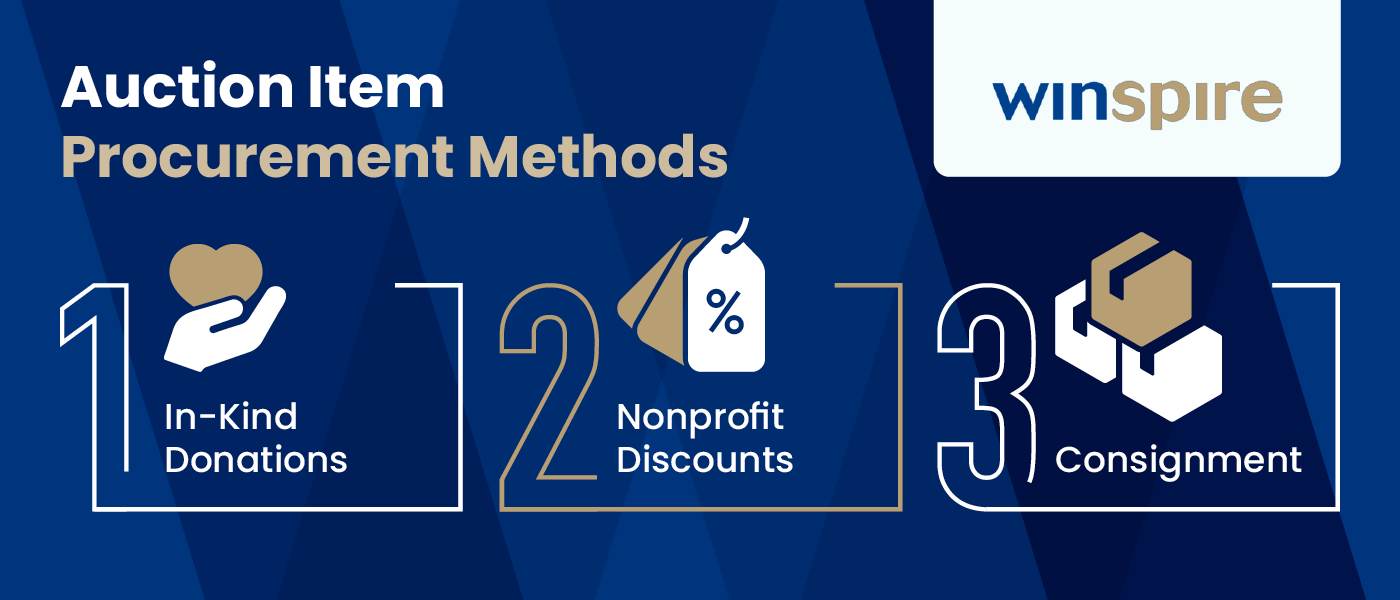
- In-kind donations from individuals and corporate sponsors: Best for physical goods and gift certificates
- Nonprofit discounts: Best for any ticketed experience
- Consignment: Best for vacation packages
While you should try to procure as many items as possible using the first two methods to keep upfront event costs low, vacation packages—which tend to be the most popular and lucrative auction prizes—are rarely donated and can be difficult to piece together from discounted, disparate purchases. And that’s the exact reason why consignment travel providers like Winspire exist!
Explore Item Procurement for Auctions With Winspire
Winspire curates a variety of bucket-list vacation packages (known as Experiences) that are specifically designed to be used as prizes in nonprofit fundraisers like auctions and raffles. Your nonprofit can tap into Winspire’s consignment model in four easy steps:

- Select the Experiences you want. Simply add the travel packages you think would appeal most to your target audience to your Suitcase (cart). If you have any questions about which Experiences to choose, Winspire’s Event Fundraising Consultants are happy to help!
- Promote them to your supporters. Winspire will provide descriptions of each package and relevant images to include in your nonprofit’s marketing materials. This way, auction participants will come to the event excited to bid on these big-ticket items.
- Offer them at your event. You can sell each Winspire Experience more than once—e.g., during an auction and in a raffle that are part of the same event—and every dollar you raise above the Nonprofit Cost (list price) goes directly to your mission. Plus, our model is 100% risk-free because you only pay for what you sell.
- Winners redeem their packages. After the event, you’ll just need to provide a voucher to each winning bidder. Then, they’ll book their travels through Winspire with no additional work required on your organization’s end.
Winspire’s selection includes over 200 different vacation packages at any given time, and our team is always coming up with new ideas to keep our offerings fresh and relevant to today’s auction participants. It’s no wonder, then, that our Experiences have been featured at more than 100,000 nonprofit events since Winspire’s founding in 2008!
4. Build Auction Item Procurement Packets
Creating procurement packets will benefit both your nonprofit’s fundraising team and potential auction item donors. For your team, procurement packets provide a way to stay organized and focused throughout the process. Plus, prospective donors will appreciate being presented with professional-looking documents containing clear information and therefore may be more receptive to your ask.
Your auction item wishlist is the first of three documents you should include in each procurement packet. Let’s look more closely at the other two: donation request letters and in-kind donation forms.
Donation Request Letter
Auction item donation request letters’ basic purpose is to guide your asks. Whenever possible, your team should meet with potential donors in person or via video chat to discuss their contribution options and answer any questions they may have in real time. In these situations, donation request letters serve as an outline for the discussion and a leave-behind if the donor isn’t ready to commit their support right away.
However, if a face-to-face meeting with a donor isn’t feasible, your donation request letter will have to stand on its own as an ask. Create a template that can serve both functions and that your team can easily customize for each individual or business they approach. To ensure your letter includes everything necessary to solicit auction item donations, use the checklist below or check out our complete guide to auction donation requests.
In-Kind Donation Form
In-kind donation forms help team members gather all necessary information for each auction item they secure. They should also be customized for each donor (so it’s helpful to fill in as much information as possible before or during meetings) and feature your organization’s branding in a clear layout to give a professional impression.
Make sure your donation form includes fields for recording the following information:
- The donor or sponsor’s name and contact information (address, email, phone number)
- Your nonprofit’s name and general contact information
- The name and contact information of the team member who collected the donation
- The item’s name, description, and other relevant information (quantity, restrictions, etc.)
- The estimated monetary value of the donation
- The donor’s signature and the date the donation was pledged
- A team member’s signature and the date the donation was collected
Once you receive a completed form and record the information on it, send a copy of the form along with a receipt to the donor for tax purposes.
5. Track Item Procurement Progress
As auction items start to come in, record all procurements in a spreadsheet or your event fundraising software if it includes features for doing so. Tracking your team’s progress serves several purposes, including:
- Ensuring you collect the right quantity and quality of items to set your nonprofit up to achieve its fundraising goal.
- Organizing the information you need to create an auction catalog (if you’re hosting a live auction) or display and bid sheets for each prize (if your auction is silent).
- Making it easier to thank auction item donors and procurement team members for their individual contributions after your event.
- Providing data you can reference as you plan your next auction about which prizes were the easiest and most cost-effective to procure and which providers you could reach out to again.
Put one staff member in charge of recordkeeping to ensure that procurement information is formatted consistently and that nothing falls through the cracks as the busyness of planning ramps up for your team.
Wrapping Up: Additional Resources on Procuring Auction Items
Procuring the right charity auction items in a professional, strategic way can make all the difference in your event’s success. Use the tips in this guide to get started, and remember to take advantage of all of the resources available to you (including consignment travel providers like Winspire!) to build a slate of prizes your supporters will love.
For more information on all things auction items, check out these resources:
- The Ultimate List of 100+ Silent Auction Item Ideas. Browse our complete list of popular, unique, and valuable auction items to kickstart your wishlist brainstorming.
- How to Price Silent Auction Items: The Ultimate Guide. Once you’ve started procuring auction items, explore industry best practices for pricing them fairly.
- Design Your Own Charity Auction Catalog + Template. Learn how to showcase auction items and recognize their providers in a well-designed auction catalog.

Jason Champion – Vice President of National Accounts at Winspire
Jason Champion is the Vice President of National Partnerships at Winspire, a global provider of bucket-list vacation experiences for charity auctions and fundraisers. He is responsible for overseeing and managing relationships with major clients and partners across the country, which involves developing and executing strategic plans to drive revenue growth, expand market share, and ensure client satisfaction. Jason also collaborates closely with Winspire team members in sales, marketing, and other relevant departments to align business objectives with customer needs.