Raffles are an entertaining and lucrative addition to nearly any nonprofit event or campaign. The suspense of the drawing, combined with the relative accessibility of entry, makes these revenue enhancers popular with supporters of various demographics. But if you’re considering adding a raffle to your organization’s next fundraiser, you might be wondering, “How can we put a twist on this classic activity to keep our efforts interesting and fresh?”
Fortunately, you’ve come to the right place! In this guide, you’ll learn all you need to know to incorporate engaging raffle games into your nonprofit’s fundraisers, including:
- Fundraising Raffle Games: The Basics
- Fundraising Raffle Games: Frequently Asked Questions
- Top 25 Raffle Game Ideas (Categorized!)
- How to Secure Prizes for Raffle Games
Before we dive into our favorite raffle game ideas, let’s lay the groundwork by discussing the basics of running a successful fundraising raffle.

Fundraising Raffle Games: The Basics
If you’ve worked in the nonprofit sector for a while or even just participated in fundraising events, you probably know what a basic raffle is: an activity in which an organization sells tickets to benefit their cause, draws a random ticket, and awards a prize to the winner. So, essentially, all you need to run a raffle is:
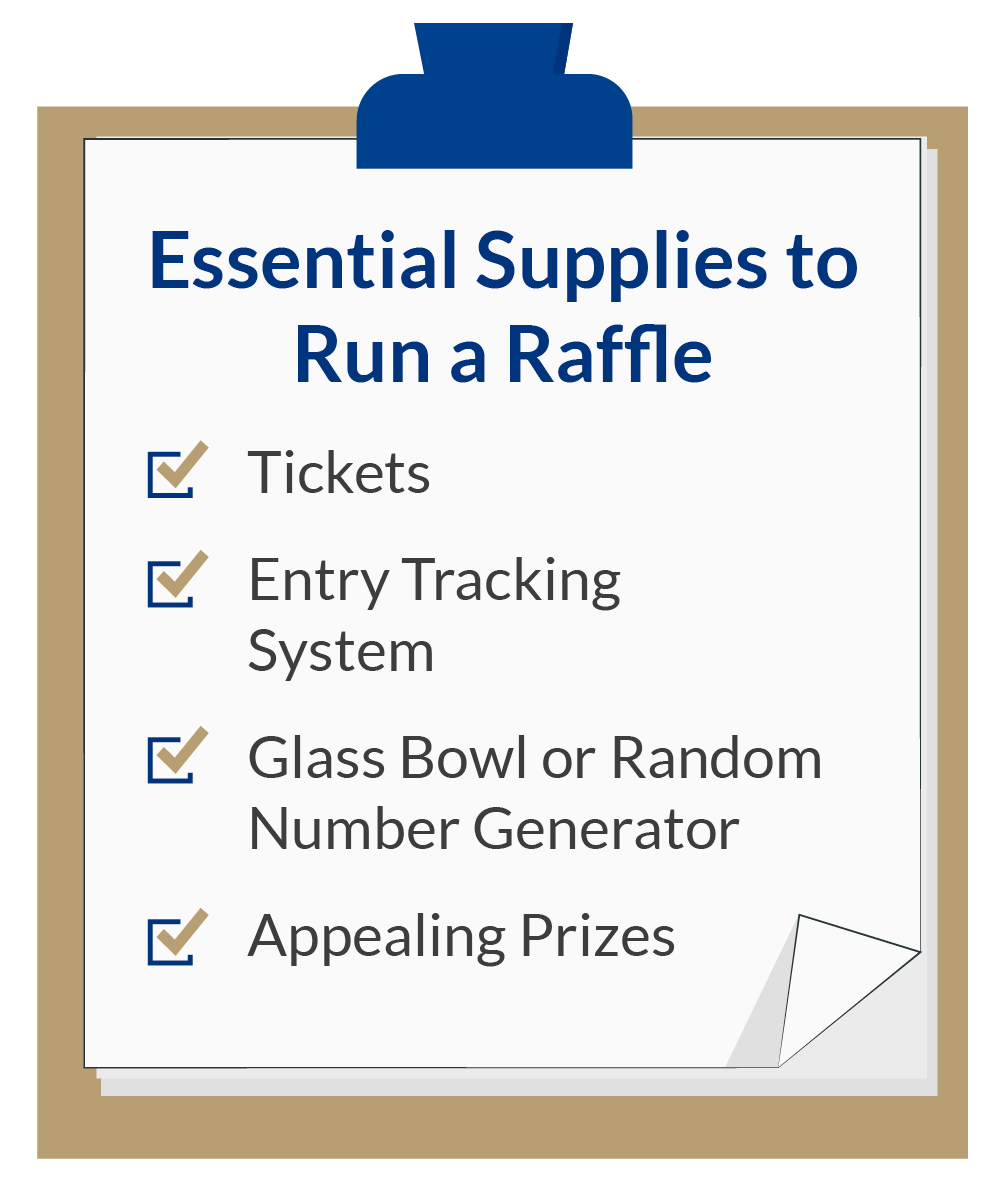
- Tickets: These can be traditional paper tickets, a digital receipt for a virtual raffle, or a more creative item (as discussed in several of our games).
- An entry tracking system: Many organizations use double ticket rolls to allow them to match the numbers, write the supporter’s name on each ticket they purchase, or use a spreadsheet to track online or non-traditional ticket purchases.
- A way to shuffle and draw the tickets: Online random number generators are useful if you’ve tracked entries in a spreadsheet, while a glass bowl makes for the most intriguing drawing with paper tickets.
- Appealing prize(s): These could be anything from a gift card or basket of goodies to exclusive concert tickets or an all-inclusive vacation package. Just make sure to adjust your raffle ticket price according to the grand prize’s value.
While a valuable prize can make any raffle memorable for the winner, building on the classic raffle format in creative ways is more engaging for all participants, especially seasoned nonprofit supporters who have likely seen paper tickets drawn from glass bowls over and over. If donors have a particularly good time participating in your raffle, they’re more likely to enter again.
Fundraising Raffle Games: Frequently Asked Questions
What are the best types of raffle games to maximize fundraising revenue?
The raffles that raise the most money combine high perceived value with low barriers to entry. Think 50/50 raffles, wine pulls, and reverse raffles. These formats win on revenue for different reasons. A 50/50 raffle requires almost no overhead and converts impulse buyers because the math is simple: bigger pot = bigger prize.
Wine pulls and mystery box formats generally have low entry points and add a fun element of surprise, which drives volume. Reverse raffles, meanwhile, justify a higher ticket price because supporters are paying for an experience that unfolds over a longer segment of a fundraising event. The common thread across all of these ideas is that they’re easy to understand, fast to execute, and scale naturally with a bigger participant list.
Do you need a permit or license to hold a nonprofit raffle?
In most areas, yes. Charitable raffles usually require a permit or license, although the rules vary significantly by state. Some states cap the dollar value of prizes you can offer without a special license, others require your organization to hold 501(c)(3) status for a minimum period before you’re eligible, and a few restrict raffles to specific days or venues. There are also four US states (Alabama, Arkansas, Hawaii, and Utah) in which raffles are completely illegal, and two more (Florida and North Carolina) where they’re illegal aside from some limited nonprofit exemptions.
Local municipalities can layer on their own requirements on top of state law, so checking with your city or county clerk’s office is just as important as checking state statutes. Because the penalties for running an unlicensed raffle can include fines or having to void the results entirely, you should confirm all relevant laws and apply for permits before even announcing a raffle to your supporter base.
What is the difference between a normal raffle and a reverse raffle?
A normal raffle draws winning numbers in order, while a reverse raffle eliminates losing numbers until one ticket remains. In a standard raffle, every ticket has an equal shot at winning from the start, and there may be a single grand-prize draw or a few smaller prizes up for grabs as well as a large one.
A reverse raffle flips this paradigm: numbers are pulled one by one and the holders are eliminated, not declared winners, until just one ticket (and participant) is left standing. That structure tends to keep a room engaged for longer, since nobody checks out early after a quick loss. It also pairs naturally with a smaller, more exclusive prize pool.
How do you legally run a 50/50 raffle online?
Running a 50/50 raffle online legally means using a licensed digital raffle platform, confirming your state permits remote ticket sales, and following the same registration rules that apply to in-person raffles. Not every state allows online raffle ticket sales, and some that do require a separate endorsement on top of your standard charitable gaming license, so this is the first box to check before you incorporate ticket sales into your charity event marketing campaign.
From there, a reputable online raffle platform will handle the parts that create the most legal exposure — verifying buyer age and location, generating a randomized and auditable draw, and producing the transaction records you’ll need if your state requires post-event reporting. Skipping a compliant platform in favor of a generic payment link or social media poll is the most common (and costliest) mistake nonprofits make with online raffles, so make sure you have the paper trail you need if you’re ever asked how the draw was conducted.

Top 25 Raffle Game Ideas (Categorized!)
The best raffle games to add to your nonprofit’s fundraisers will depend on your audience, event or campaign format, and budget. To help you decide, here is a broad selection of our favorite ideas!
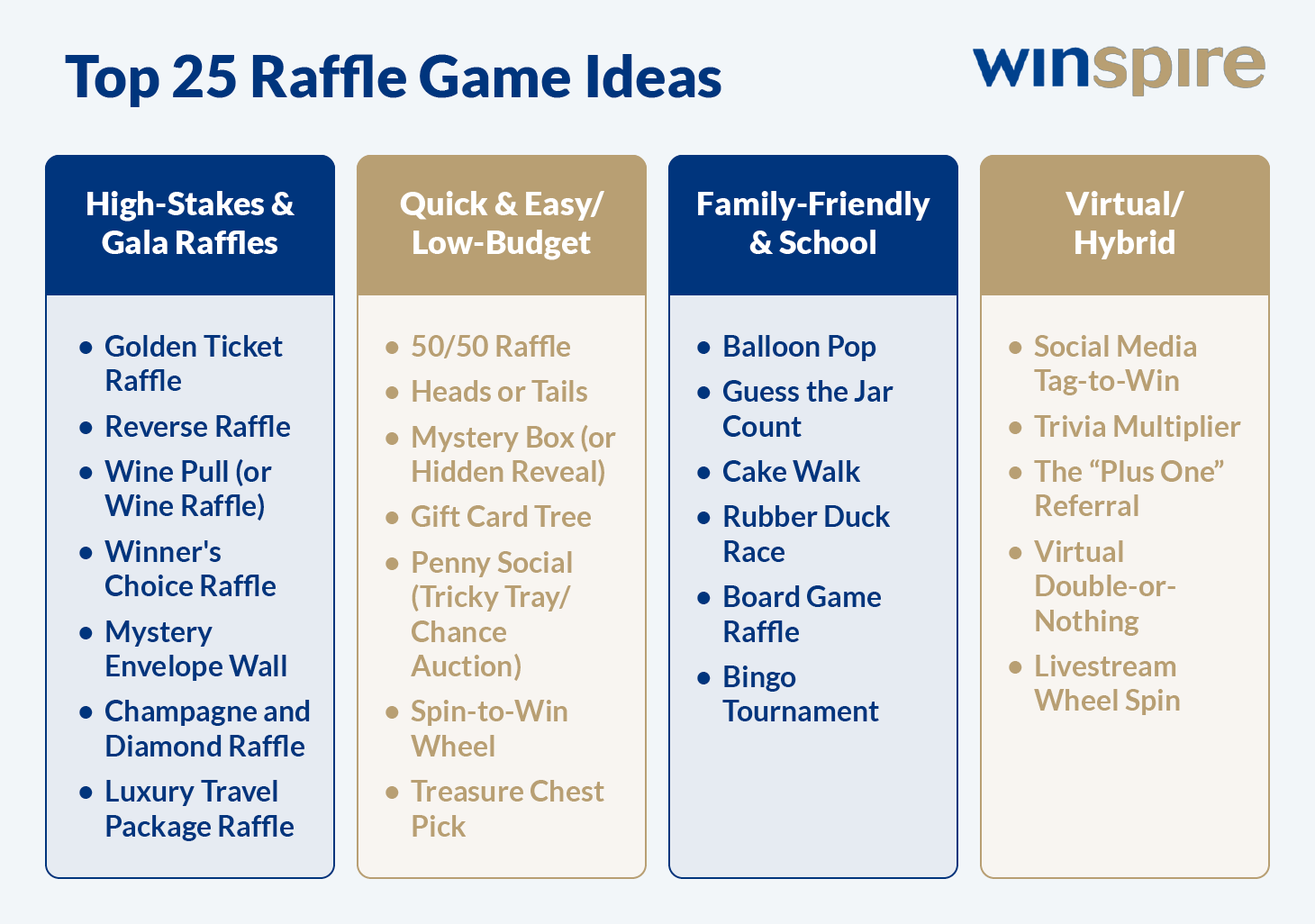
Category 1: High-Stakes & Big-Ticket Raffles
These formats are built for galas or other more formal fundraisers where participants are willing to pay a premium for high-quality experiences. They work because they lean into theater and exclusivity rather than volume: fewer tickets, higher price points, bigger emotional payoff.
Golden Ticket Raffle
How It Works: One ticket is the winner, and everyone else is paying for a chance at a high-value prize.
A golden ticket raffle hides one winning ticket among a set of identical entries, with every guest buying in at the same price for a shot at a single grand prize — a luxury getaway or other high-end item works best here. Cap ticket sales at a number that keeps the odds attractive, and select a moment during your event for everyone to open their envelopes to maximize engagement.
Reverse Raffle
How It Works: Tickets get eliminated, not drawn, until one remains.
A reverse raffle pulls numbers one at a time and eliminates participants instead of declaring winners, which keeps the whole audience locked in until the very end. It supports a higher buy-in than most formats and performs especially well with organizations that have a strong base of repeat donors.
Wine Pull
How It Works: Guests pull a wrapped bottle and don’t know what they’ve got until they unwrap it.
A wine pull sells numbered tickets tied to mystery bottles, so a guest might pull a $10 grocery store wine or a $150 vintage. Donated bottles from individual supporters or local shops keep costs low while perceived value stays high. As Winspire often recommends, you can elevate a standard wine pull by tying it to the bottom of one bottle so that the lucky guest who pulls it wins a premium experience, like a wine tasting at a vineyard.
Winner’s Choice Raffle
How It Works: One ticket, several prize options, winner picks.
A winner’s choice raffle offers three or four distinct packages—such as a tech bundle, jewelry, or a vacation—and lets the winner choose whichever best fits their lifestyle. It takes more upfront sourcing to land multiple comparable prizes, but the broader appeal at the point of sale usually makes up for it.
Mystery Envelope Wall
How It Works: On a wall of sealed envelopes, each one contains a different prize.
Guests buy the chance to pick blind from dozens of envelopes ranging from small gift cards to major experiences The visual of a full wall of identical envelopes can drive curiosity and sales before guests fully understand the mechanics. It’s a strong fit when you’ve got a mix of small donated items and a few standout prizes to give away.
Champagne and Diamond Raffle
How It Works: Most bottles hold champagne, but one holds real jewelry.
This format raises the stakes on a classic wine pull by hiding a diamond pendant or ring inside one bottle among the lineup, so every “miss” is still a nice bottle of champagne. It’s a natural fit for galas with a formal or luxury theme, and sourcing the jewelry through a partnership with a local jeweler keeps upfront costs low.
Luxury Travel Package Raffle
How It Works: One or more vacations are sold through a limited, higher-priced ticket run.
Travel consistently outperforms other types of raffle prizes because it’s experiential and broad in its appeal.Travel packages sourced through a trusted nonprofit travel partner perform best, since guests trust that the flights, accommodations, and activities have already been vetted.
Category 2: Quick & Easy or Low-Budget
This category is for organizations that need a raffle that’s fast to set up, requires little to no prize budget, and can run alongside almost any other fundraising activity. These formats are built for volume and simplicity over spectacle.
50/50 Raffle
How It Works: No prize budget needed—the pot itself is the prize.
Half the total pot goes to the winning ticket holder and half to your organization, so guests instantly understand the math: bigger crowd, bigger pot, bigger prize. To price your tickets effectively, estimate your expected sales and the total pot you want to build. For instance, selling 100 tickets at 20$ each creates a $2,000 pool. Meaning you get to award a $1,000 grand prize while raising matching funds for your cause.
Heads or Tails
How It Works: Guess the flip, stay standing, win the pot.
This live elimination game needs nothing more than a coin and a microphone—participants call heads or tails before each flip, and wrong guessers are eliminated until one winner remains.
Mystery Box (or Hidden Reveal)
How It Works: Sealed boxes of unknown value, sold by the ticket.
Guests know they’re getting something, just not what. Your mystery boxes can hold gift cards, electronics, local swag, or a standout prize mixed in with modest ones. It’s ideal for organizations that rely on in-kind donations for raffle prizes, since boxes can contain almost anything that would appeal to your audience.
Treasure Chest Pick
How It Works: Reach in, grab a prize, pay per pick.
This idea runs on the same surprise-driven appeal as a mystery box, but at a lower price and faster pace, since guests can pick multiple times in one visit. It’s especially popular with families, where the hands-on “reach in” moment is half the fun.
Gift Card Tree
How It Works: Donated gift cards are pinned to a display and picked blind.
A gift card tree is one of the easiest prizes to source. Reach out to local businesses for $10–$25 gift cards; it’s a much easier ask for partners who may not have the budget for major sponsorship. The visual display alone pulls guests over to look. It’s a strong fit for community-rooted organizations whose guests recognize the businesses on the tree.
Penny Social (Tricky Tray/Chance Auction)
How It Works: Participants choose their own odds by stacking tickets on the prizes they want.
Unlike a standard raffle, a penny social lets supporters place tickets directly next to whichever donated prize they’re chasing, which makes it feel more strategic and interactive. It takes a bit more setup—tables, labeled bags, and organizing prize displays—but performs incredibly well if you’re running an in-person event and have plenty of donated items that you can adapt for your raffle.
Spin-to-Win Wheel
How It Works: Pay for a spin, win whatever it lands on.
This instant-gratification raffle format keeps a line moving and creates visible, repeated excitement since winners are announced on the spot instead of at one draw. Weight the wheel toward smaller prizes with one or two jackpot sections to keep costs predictable.
Treasure Chest Pick
How It Works: Reach in, grab a prize, pay per pick.
This idea runs on the same surprise-driven appeal as a mystery box, but at a lower price and faster pace, since guests can pick multiple times in one visit. It’s especially popular with families, where the hands-on “reach in” moment is half the fun.
Category 3: Family-Friendly & School
These formats are designed for audiences of kids and multigenerational families are part of the crowd. The bar for entry is low, the games are visual and easy to understand, and the focus is on fun over prize value.
Balloon Pop
How It Works: Pop a balloon and find your prize ticket inside.
Guests buy and pop a balloon to reveal a folded ticket for a prize, and the physical act of popping does most of the entertainment work on its own. It’s inexpensive to run and one of the highest-margin games on this list. Mix in a handful of bigger prizes among smaller items and paper slips that just say “Try again!” to keep it exciting.
Guess the Jar Count
How It Works: The closest guess to the jar count takes it home.
Participants pay to guess how many items fill a clear jar—candy, coins, marbles, etc.—with the closest guess winning. It’s nearly free to run, typically doesn’t require special licensing since it’s skill-based, and doubles as a passive activity guests can join all event long.
Cake Walk
How It Works: Walk the numbered spots, freeze when the music stops, win if it’s your number.
This carnival classic needs only music and numbered spots, and participants recognize the format instantly, which makes it an easy sell. Source prizes through local bakery partners or volunteer baking donations to keep costs low.
Rubber Duck Race
How It Works: Numbered ducks race through water, and the first one across the finish line wins.
Guests buy a numbered duck that’s released into a pool, stream, or inflatable channel, and the visual of dozens of ducks racing to the finish gives the whole event a natural rallying point. Run a single race or scatter multiple heats. While pools are easier, you can use natural waterways if you secure the proper environmental licensing and plan for careful cleanup.
Board Game Raffle
How It Works: Donated games, bundled and raffled off as a “game night in a box.”
This is an easy theme to use for school fundraisers, since families are already invested in donating to their kids’ school. Pair a few premium titles with budget-friendly ones to keep entry accessible, and you could even use a video game system as the grand prize if you can find a discounted or donated one.
Bingo Tournament
How It Works: Buy a card, play live, win the round.
Bingo is one of the most universally understood formats across age groups, making it reliable for audiences of all ages. Run several rounds with different formats (traditional, four corners, cover-all, etc.) prizes at the end of each one to extend engagement and multiply entries.
Category 4: Virtual/Hybrid
These digital-first formats are flexible—they can serve as the centerpiece of a fully virtual fundraising campaign, or act as an online extension for an in-person event to engage your supporters anywhere.
Social Media Tag-to-Win
How It Works: Like, share, or tag a friend for an extra entry.
This format extends your raffle’s reach beyond your existing supporter list, since every tag and share puts your mission in front of a new audience organically. Use it to supplement a paid giving campaign since social media tagging is more effective at raising awareness than revenue.
Trivia Multiplier
How It Works: Buy a base ticket to play, then answer trivia correctly to earn bonus entries.
By gamifying the initial purchase, donors are motivated to buy a ticket (e.g., a $25 buy-in) because they can use their knowledge to ‘ear’n better odds without spending extra money. This format is fully automated via mobile, making it perfect for remote audiences at home or live-event guests playing at their tables. You can easily measure its success by tracking the conversion rate of trivia-players versus non-players to hit specific, time-bound revenue targets.
The “Plus One” Referral
How It Works: Donors get a custom link to share; if a friend buys a ticket using it, they both get a bonus entry.
This borrows the proven “refer-a-friend” model used by major e-commerce brands and applies it to your digital raffle. After purchasing a ticket, supporters receive a unique, trackable URL to text or post online. It turns every buyer into a highly motivated micro-influencer, as they directly increase their own odds of winning by driving new revenue for your cause. Using standard referral software, you can set a SMART goal to track exactly how much secondary revenue is generated strictly through these peer-shared links.
Virtual Double-or-Nothing
How It Works: Winners can bank the prize or risk it to double it.
This optional gamble adds suspense to a virtual or livestreamed draw, which keeps remote audiences engaged for long periods. Keep the initial prize modest—e.g., you might start with a $20 food delivery voucher or a one-month streaming subscription—so your financial risk stays predictable either way.
Livestream Wheel Spin
How It Works: Remote guests watch the wheel spin live, in real time.
Broadcasting a spin-to-win draw over social media or a streaming platform brings the in-person energy of this format to remote supporters, especially useful for organizations spread across multiple cities. Promote a specific date and time rather than a vague window—it drives more viewership and ticket sales before the draw.
If you aren’t sure which of these ideas will work best for your nonprofit, try our interactive quiz to see which raffle games are best to mix and match based on your event, capacity, and logistics:
How to Secure Prizes for Raffle Games
Choosing the right raffle game for your audience is only half the battle—you also need to secure a prize that will compel them to enter. However, it’s important to balance this appeal with cost savings so your raffle earns your organization money while keeping ticket prices reasonable.
To procure raffle prizes at little or no cost, your nonprofit can choose among three methods, each of which is best suited to acquiring a different type of item:
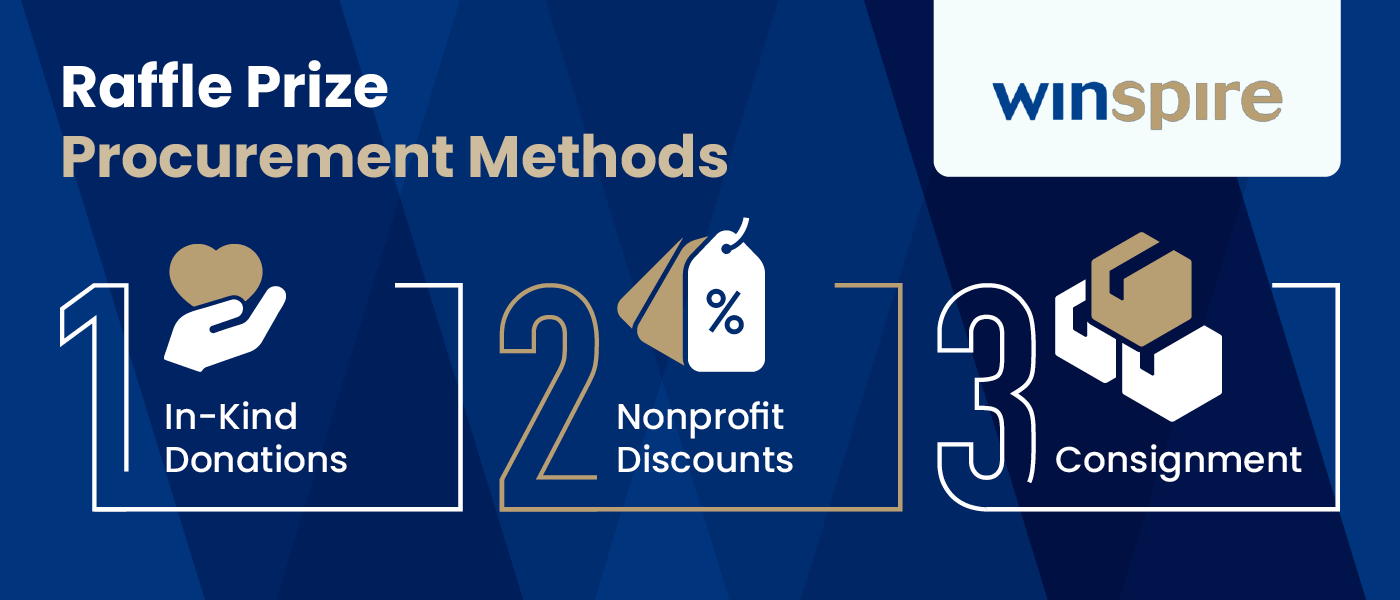
- In-kind donations: Best for gift certificates and lower-value physical items that individual donors or corporate sponsors would be willing to give away for free.
- Nonprofit discounts: Best for higher-value physical items and ticketed experiences (sporting events, shows, amusement park entry, etc.).
- Consignment: Best for vacation packages, since those are tricky to piece together from donated or discounted items.
For the best experience with the final method, choose a consignment travel provider that works exclusively with nonprofits and offers a wide range of bucket-list packages risk-free—like Winspire!
How Winspire Works
To use any of Winspire’s 200-plus vacation packages (known as Experiences) as prizes for your nonprofit’s raffles or auctions, follow these simple steps:

- Choose the Experiences you want. If you aren’t sure which trips would appeal to your organization’s unique audience, our Event Fundraising Specialists are happy to help you narrow down the list and add your final choices to your Suitcase (cart).
- Promote them to your supporters. Winspire will provide professional-grade photos of each destination that you can include in marketing materials for your raffle.
- Offer them at your event. You can sell Winspire Experiences multiple times—for instance, during a raffle and live auction in the same event—and every dollar you earn above the Nonprofit Cost (list price) goes directly to your organization.
- Winners redeem their packages. All you have to do is provide your raffle winner with a voucher to book their trip through Winspire, and we’ll handle the rest!
With Winspire, you only pay for what you sell at your event, so our Experiences are 100% no-risk. Over the past 17 years, we’ve helped nonprofits raise more than $110 million for their missions!
Wrapping Up: Additional Resources on Raffle Fundraising
The game ideas above are just a few of the many possible ways your nonprofit can take a new approach to raffle fundraising. Keep your audience and revenue goals in mind as you weigh the pros and cons of each option, and don’t forget to procure appealing prizes while minimizing cost and risk (as Winspire Experiences do with travel!) to encourage more participation.
For more information on raffle fundraising, check out these resources:
- Silent Auction Donation Request Letters: Guide + Templates: Explore templates and strategies to draft compelling solicitation letters that win over local businesses and donors.
- The Ultimate List of 100+ Silent Auction Item Ideas for 2026: Browse this ultimate list of silent auction items for inspiration, as the most popular auction packages naturally double as highly profitable raffle prizes.
- How to Plan an Auction Fundraiser in 10 Simple Steps: Follow this comprehensive roadmap to streamline your team’s planning process and host a stress-free, successful event.


Jason Champion – Vice President of National Accounts at Winspire
Jason Champion is the Vice President of National Partnerships at Winspire, a global provider of bucket-list vacation experiences for charity auctions and fundraisers. He is responsible for overseeing and managing relationships with major clients and partners across the country, which involves developing and executing strategic plans to drive revenue growth, expand market share, and ensure client satisfaction. Jason also collaborates closely with Winspire team members in sales, marketing, and other relevant departments to align business objectives with customer needs.