Your nonprofit’s success depends in large part on spreading awareness of your mission and work to potential supporters. This is especially true when you’re planning large-scale fundraising campaigns and events that require widespread participation to achieve their goals. However, event planning in particular can be time- and resource-intensive, and the first aspect to fall through the cracks is often marketing.
If you’re feeling overwhelmed by the prospect of charity event marketing, you’ve come to the right place! This guide will cover everything you need to know to promote your events effectively, including:
- Charity Event Marketing FAQ
- Our Favorite Charity Event Marketing Strategies
- Additional Resources on Nonprofit Event Marketing
Whether you’re promoting a classic gala, an energy-filled 5K race, or an innovative raffle game, these tips and ideas will provide a solid foundation for getting supporters’ attention—not only about your event, but also about the community impact it’ll fund. Let’s get started!
Charity Event Marketing: Frequently Asked Questions
Why is charity event marketing important?
When done well, charity event marketing can benefit your organization in multiple ways. Specifically, it helps increase:
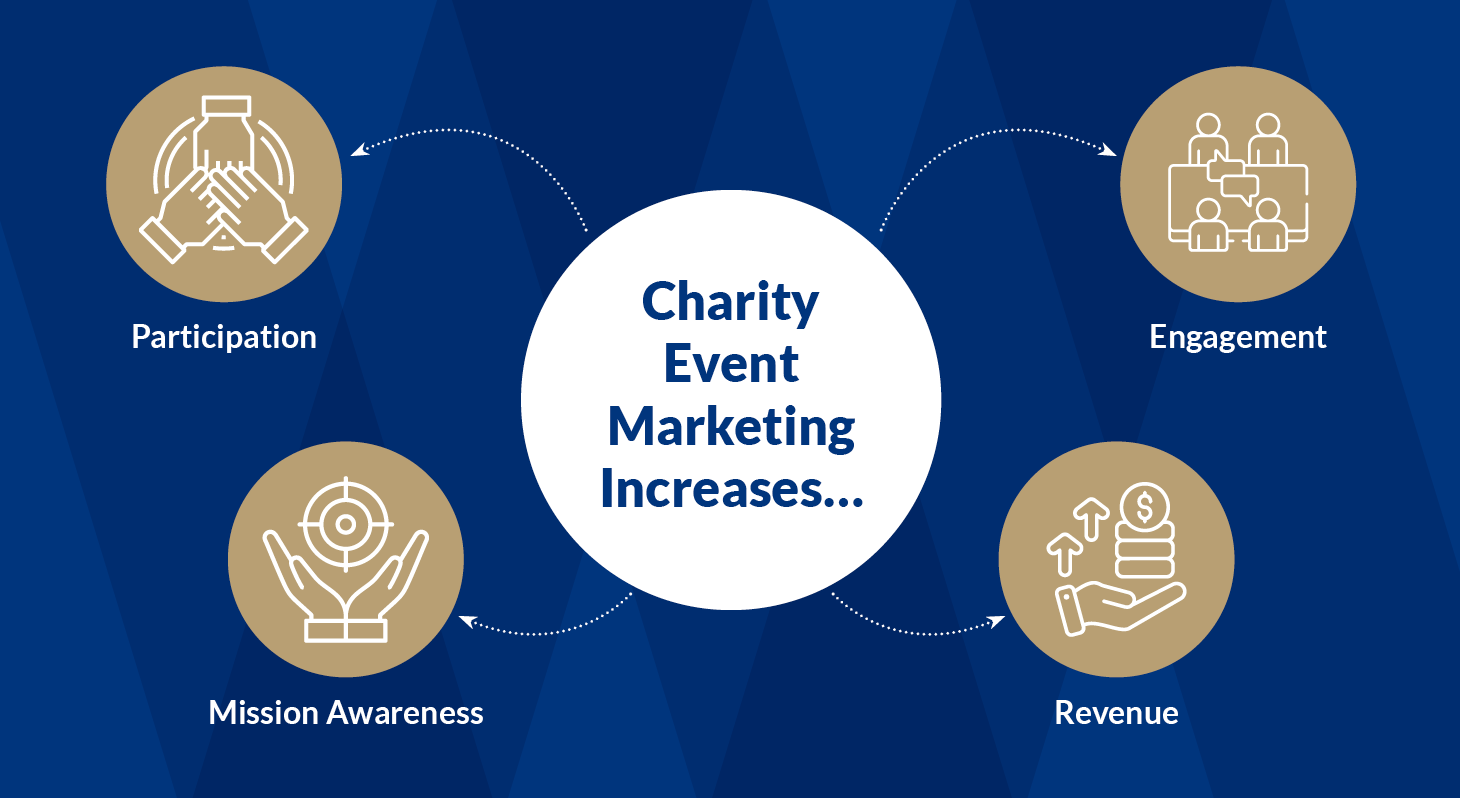
- Participation by creating many touchpoints where attendees can find out about your event and sign up
- Engagement by getting participants excited about the enjoyable, memorable experience they’ll have at your event
- Revenue by setting up the potential to receive more registration fees and additional donations through higher participation and engagement rates
- Mission awareness by showcasing who your nonprofit is and what you do aside from hosting great events
Naturally, these advantages will be more evident if your marketing efforts are strategically crafted, timed, and tracked so you can improve upon them with every event you host.
How far in advance of a fundraising event should marketing begin?
In most cases, three to six months before an event is a good time to start promoting it. This way, you can get on participants’ schedules early and space out your marketing messages to avoid overwhelming them, but also prevent supporters from signing up so early that they forget when your event is happening and double-book themselves in the meantime.
When you send your first marketing messages, don’t worry about having all of the details of your event in place. As long as you know its basic logistics (date, time, format, location, etc.), you can tell supporters to mark their calendars. Then, you may add more details to your later promotions and reminders, such as announcements about your catering partners or photos of featured silent auction items, to generate additional interest in your event.
How do you determine your target audience for charity event marketing?
Segmentation—i.e., the process of grouping supporters based on shared characteristics—is the most effective way to pinpoint target audiences for nonprofit marketing campaigns, event-related and otherwise. As you plan your event, segment potential participants based on these donor data points:
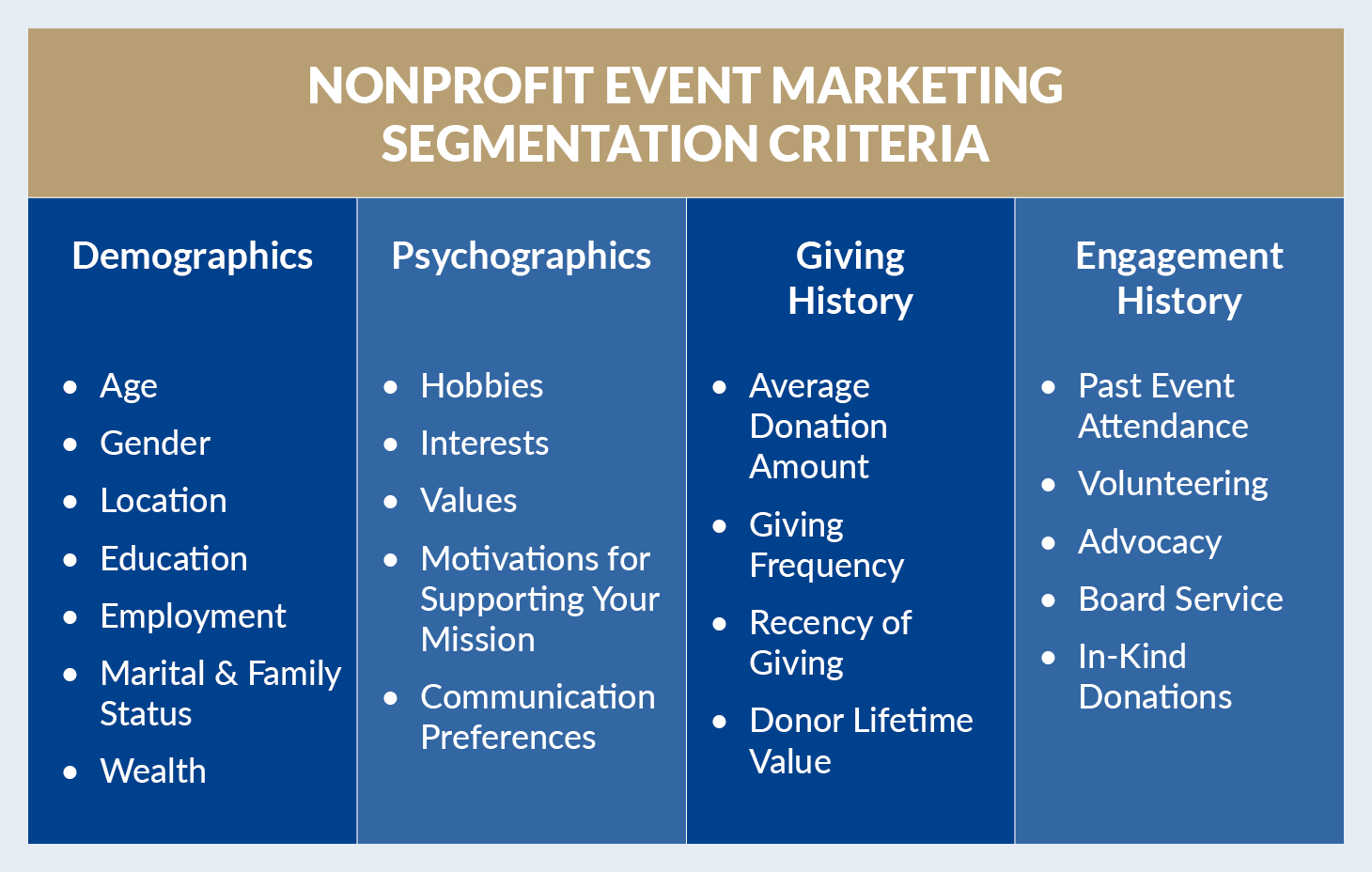
- Demographics: Age, gender, location, education, employment, marital and family status, wealth
- Psychographics: Hobbies, interests, values, motivations for supporting your mission, communication preferences
- Giving history: Average donation amount, frequency and recency of giving, donor lifetime value
- Engagement history: Past event attendance, volunteering, advocacy, board service, in-kind donations
Once you have your segments in place, decide which groups are most likely to attend this particular event. For example, major donors would likely enjoy a gala, donors whose hobbies are related to physical fitness might want to attend a 5K, and supporters with young children or grandchildren may appreciate a family-friendly movie night. You should also consider if there are specific groups you’d like to get more involved with your organization by inviting them to your event (e.g., younger generations or volunteers at risk of lapsing).
Then, think about what messages and marketing channels might resonate with your target audience and plan your strategy accordingly. For instance, an older major donor might respond best to a traditional printed invitation to your gala that allows them to RSVP by mail. However, a busy young parent may be more receptive to a text message with a link to a mobile-friendly registration form so they can sign up for your movie night on the go.
What are some other charity event marketing best practices?
In addition to identifying a target audience, here are a few more tips to take your nonprofit’s event marketing from good to great:
- Leverage multiple marketing channels. Even if you have a specific participant group in mind for your event, other supporters might still want to sign up, and your target audience likely uses multiple channels (e.g., the young parent mentioned above may also use email and social media despite preferring texting). Multi-channel marketing will get your event in front of as many potential attendees as possible.
- Keep your branding consistent across materials. Branding instills trust in your nonprofit’s supporters and encourages them to register for your event. Ensure your logo, tagline, color scheme, fonts, and messaging (written tone, word choice, mechanics, etc.) are the same across every channel so participants are confident that the materials came from you.
- Make online content accessible. All of your nonprofit’s supporters should be able to interact with your digital marketing materials, including those with disabilities. Include alternative text for images and transcripts or captions for videos, ensure adequate contrast between text and background colors, and check that online materials are navigable with a keyboard to guarantee accessibility.
- Include clear calls to action. Every marketing message should include a link or QR code to your event registration form so supporters can take the next step right away. Make the link very visible—colorful buttons are helpful here—and use compelling language to lead into it, such as “Sign up today!” or “Don’t miss the event of the year!”
- Collect event marketing data. Monitoring metrics like conversion rates per channel, email open rates, social media interactions, and website traffic can help you identify which channels are most effective and where you could improve your strategy. Remember to also budget for event marketing (since free tools are useful but can only get you so far) and track your spending per channel to understand your return on investment (ROI).
The most important thing to remember is that no two successful event marketing approaches are the same. Don’t assume that the strategy that worked best for another nonprofit in your network will automatically be the most effective for you, since that organization has different audiences and goals. Plus, although analyzing past campaigns can help you plan future event promotions, you may need to adjust over time to keep up with donors’ changing preferences.
Our Favorite Charity Event Marketing Strategies
Now that we’ve covered the basics, let’s dive into some of the best ways to market nonprofit events. We’ve organized our recommendations by marketing method to help you plan a content calendar around these different channels.
Website Promotions
Your nonprofit’s website is the central hub of its digital presence, so it should include detailed information about any upcoming events. However, you have two options for how to go about this marketing method.
First, you could create an Events page on your main website that includes a calendar of all upcoming fundraisers, detailed descriptions of each event, and links to registration forms. This route is typically less time-consuming and centralizes all events in one place so they’re easy to find, but it’s more constraining in terms of how much content you can add about each fundraiser.
Your other option is to build a dedicated microsite for every event you host. This method allows you to include much more information about each event, promote a unique event brand, and optimize content more effectively for search engines to drive traffic to your registration form. However, it takes a lot of time and effort to build a new site for every event, and you run the risk of the microsite being so disconnected from your main site that it actually gets less traffic.
Whichever route you choose, make sure your event site is mobile-friendly. More than half of nonprofit website traffic comes from mobile devices, and these users expect a positive experience in which webpages automatically resize to fit their screens and forms are easy to complete on a touchscreen.
Email Marketing
Email is a tried-and-true marketing tool for nonprofits, but you’ll need to use it intentionally to successfully promote your events. Although it’s helpful to create dedicated email blasts related to events and mention them in any recurring newsletters you send out, you should be careful with:
- Message timing: Stick to one or two event-related emails per week to avoid overwhelming supporters while still keeping your event top of mind.
- Subject lines: Add recipients’ names to email subjects to personalize them, and consider A/B testing two different subject lines to see which one gets the most clicks.
- Copy length: Try to keep email blasts under 200 words each (newsletters can be slightly longer), and break up long blocks of text with bullet points and subheadings.
Use your target audience segmentation data to develop email lists that help you ensure your messages reach interested audiences. However, you should also keep a list of unsubscribed or email opt-out supporters and respect their wishes not to receive emails from your nonprofit.
Text Messaging
Your organization’s email and text marketing strategies should go hand in hand. Email provides the benefit of longer messages (many SMS tools are limited to 160 characters), while texts are useful for sending quick reminders and making your messages stand out. Plus, given that the average American spends over five hours per day on their phone, text messaging reaches supporters where they probably are.
When you shop for an SMS platform for your nonprofit, try to choose one that offers text-to-give capabilities as well as marketing features. This way, you can create event-specific keywords for participants to text to your organization’s shortcode and conveniently collect additional donations throughout your event.
Social Media
Social media is particularly effective for reaching broad audiences—including those who may have never heard of your nonprofit before but follow relevant hashtags, interact with content similar to yours, or know your existing followers. These platforms also allow for two-way communication, so you can easily answer questions about your events in comment sections or direct messages.
Besides scheduling event-related posts in advance and spacing them out as you would with emails, the main thing to remember with social media is that the format of a post should always align with the platform you’re posting it on. For example, you might share the same information in a text-based post on Facebook, a series of graphics on Instagram, and a short vertical video on TikTok to meet audience expectations on each of those sites.
Digital Ads
Although advertising often takes up more of your promotional budget than other marketing methods, it’s generally worth the cost if you’re trying to get your event in front of brand-new supporters. The type of digital ad that probably comes to mind first is a social media promotion, where you pay to have one of your event-related posts that includes a registration form link show up in users’ feeds more frequently than it would otherwise.
Search ads can also help drive traffic to your event-related website content. Eligible nonprofits can even tap into this channel for free by applying for the Google Ad Grant, which gives you an allotment of monthly advertising credits you can use to make any initiative show up in “sponsored” Google search results, including events.
Direct Mail
Despite rumors to the contrary, direct mail is not dead! This channel continues to have a high ROI for businesses and nonprofits alike, as it supplements digital marketing efforts and helps reach your more traditional or less tech-savvy audiences.
Current and prospective major donors in particular respond well to direct mail invitations to events. If you send highly personalized cards or letters directly to these individuals’ homes, they’ll know that you really want them at your event, which can be an important step in the cultivation process because of the memorable experiences and hands-on interaction with your mission that events facilitate.
Flyers
Flyers are another print marketing method that supplements online event promotion, especially if you’re hosting an in-person event with a local target audience. When creating fundraising flyers, make sure to:
- Create a colorful, eye-catching design with large, bold text announcing the name of the event
- Hang your flyers in strategic places where your target audience might see them (and get permission from any third-party organizations you may need to distribute them)
- Include a QR code or easy-to-type link to consolidate online registrations
While you can hire a professional graphic designer to make your flyers, this is a marketing channel where there are plenty of free and low-cost tools for DIY creation that do a great job while saving you money!
Peer-to-Peer & User-Generated Content
Your nonprofit doesn’t have to market its fundraising events alone! Every individual in your network of loyal supporters has their own network of friends, family, and coworkers they can reach out to about your event. Facilitate these peer-to-peer and user-generated promotional efforts by:
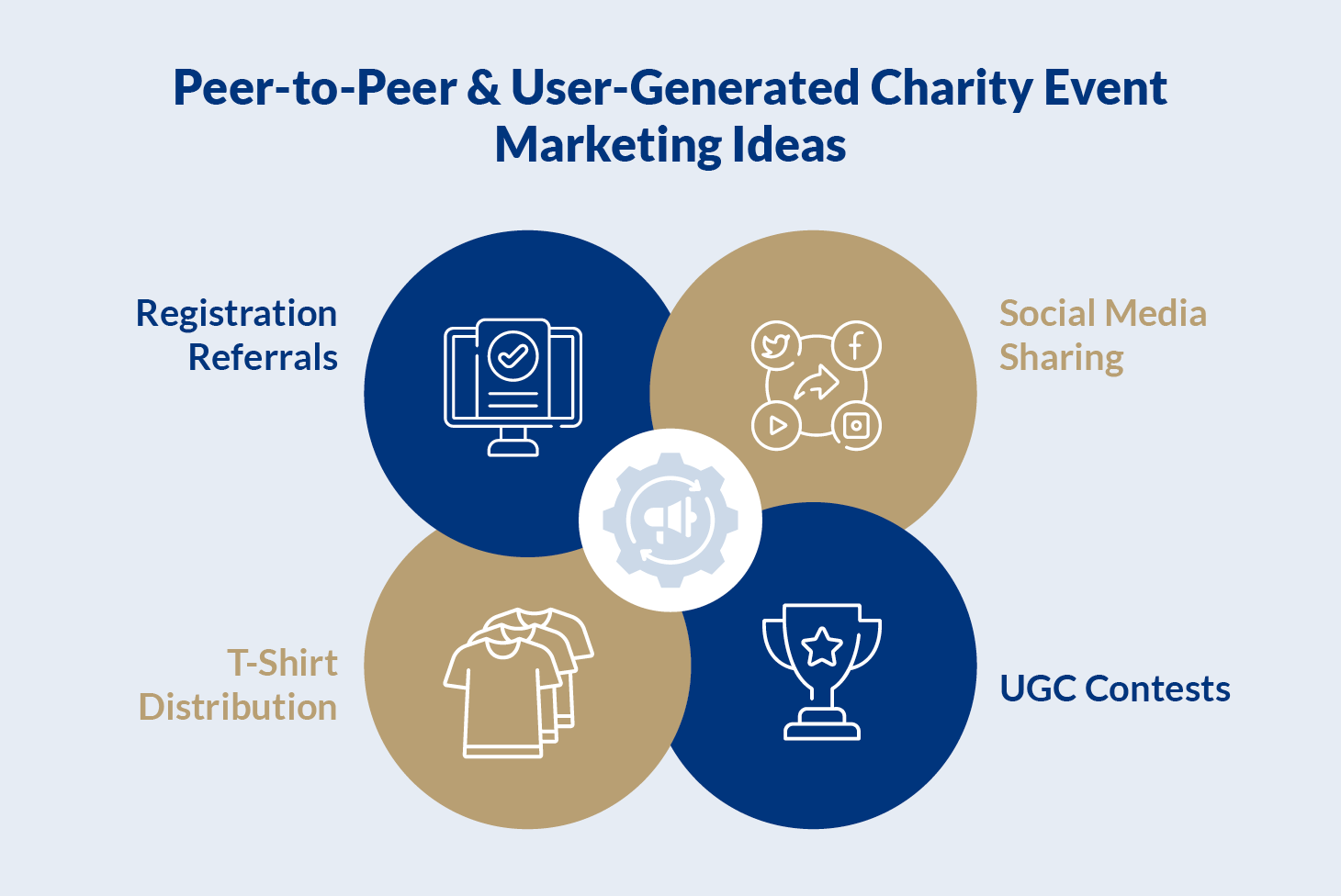
- Providing incentives like registration discounts or free merchandise for referrals
- Requesting that supporters share your event-related social media posts on their accounts
- Running contests in which supporters create their own social media posts about your event and tag your organization, then get to vote for their favorite posts
- Distributing volunteer t-shirts in advance of the event and encouraging volunteers to wear them out in public or post photos of them online
If your nonprofit gets the ball rolling, supporters who are passionate about your mission and enjoy your events will follow suit by spreading the word.
Partnerships
When you think about promotional partnerships, your mind may go to influencer marketing, which can work for nonprofit events if you partner with the right people (i.e., well-known figures who are truly passionate about sharing your mission, not just looking for a free night out). However, more charity marketing partnerships are between nonprofits and businesses rather than between nonprofits and individuals.
In many cases, the terms of corporate event sponsorships require your nonprofit to promote your sponsor in exchange for fiscal support or in-kind contributions of goods and services. While this arrangement ensures the sponsorship is mutually beneficial, it can also draw the business’s customers and employees to your event. There are also co-marketing sponsorships that occur occasionally, in which the entire purpose of partnering with a company is to promote each other’s initiatives.
Sponsors aren’t the only businesses that might assist with nonprofit event marketing, either. At Winspire, we provide consignment travel packages (also known as Experiences) specifically for nonprofits to use in fundraisers like auctions and raffles. When your organization reserves a Winspire Experience, we’ll send you multiple high-quality photos related to your chosen trip that you can use in any print or digital marketing materials, plus we make many downloadable templates and educational resources to help you develop and execute your strategy.
Besides marketing support, Winspire’s other major advantages include our wide range of vacation package options—we have more than 200 Experiences available at any given time, plus we can design custom trips—our comprehensive booking services, and our no-risk model in which you only pay for what you sell. Since Winspire’s founding in 2008, we’ve helped nonprofits across North America raise more than $110 million for their missions!
Wrapping Up: Additional Resources on Nonprofit Event Marketing
There are countless ways to promote a nonprofit event that align with all formats, budgets, and target audiences. Keep all of those factors in mind when creating your event marketing plan, and remember especially that the burden doesn’t have to fall entirely on your team when you have supporters, sponsors, and auction item providers like Winspire to help you out.
For more information on charity event marketing and related topics, check out these resources:
- Design Your Own Charity Auction Catalog + Template. Learn how to create an informative, appealing catalog that you can attach to your live auction marketing materials so supporters come ready to bid.
- Silent Auction Donation Request Letters: Guide + Templates. Dive deeper into approaching potential corporate sponsors for your events and making mutually beneficial agreements that include publicity points.
- The Best Types of Charity Auction Items + Procurement Tips. Explore our recommendations for auction items to include in your event lineup and feature in marketing content.

Jason Champion – Vice President of National Accounts at Winspire
Jason Champion is the Vice President of National Partnerships at Winspire, a global provider of bucket-list vacation experiences for charity auctions and fundraisers. He is responsible for overseeing and managing relationships with major clients and partners across the country, which involves developing and executing strategic plans to drive revenue growth, expand market share, and ensure client satisfaction. Jason also collaborates closely with Winspire team members in sales, marketing, and other relevant departments to align business objectives with customer needs.