
If your nonprofit is considering hosting an auction for the first time, there is no better time to try it out! In a 2025 survey on fundraising auctions, 77% of nonprofit professionals reported consistent or increased funding year-over-year from these events. This study also found that 83% of auction participants were interested in attending more events hosted by the same organizations, underscoring auctions’ ability to facilitate long-term supporter engagement.
However, your nonprofit will only realize these benefits if you plan your auctions strategically. To help you find your footing, we’ve broken down the auction planning process into the following steps:
- Decide What Type of Auction to Host
- Set Goals for Your Auction
- Confirm Your Fundraiser’s Logistics
- Develop a Corporate Sponsorship Strategy
- Procure Charity Auction Items
- Market Your Fundraiser
- Create Bidding Materials
- Host the Auction
- Send Follow-Up Messages
- Evaluate Your Fundraising Success
By adapting these steps to align with your organization’s resources and capabilities, you’ll be able to host memorable, meaningful auctions that keep supporters coming back year after year. Let’s get started!
1. Decide What Type of Auction to Host
A primary advantage of auctions among nonprofit fundraising events is their flexibility. However, that also means you have several important decisions to make about your event’s format at the very beginning of your planning process.
First, you’ll need to choose whether to host a live auction or a silent auction. Here is a quick breakdown of the main differences between the two formats:
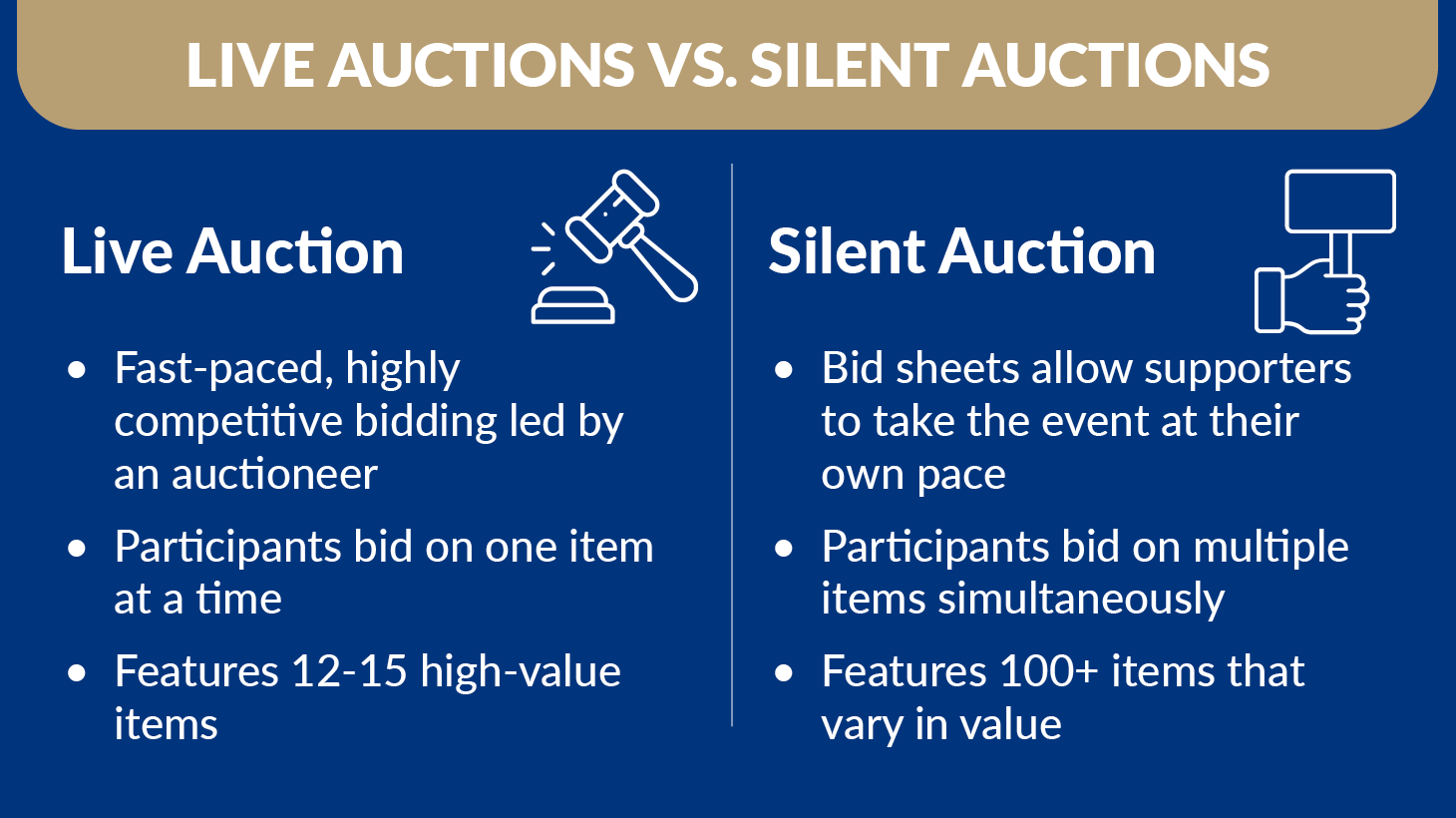
- Live auctions are fast-paced events where attendees bid on one item at a time. An auctioneer leads the bidding process, and participants compete directly with each other as they place bids in real time. To keep the event to a reasonable length, live auctions typically feature 12-15 high-value items at the most.
- Silent auctions allow participants to take the event at their own pace as they enter their bids on print or digital bid sheets. They can bid on multiple items at the same time, and all winning bids are locked in when the auction closes. Silent auctions can feature as many prizes as your organization can procure—often 100 or more—which should vary in value to appeal to different supporters’ budgets.
Particularly if you’re hosting a silent auction (live auctions tend to work best in person), you’ll also have to decide whether to hold your event in person, virtually, or in a hybrid format. In-person events provide more opportunities to connect with supporters, while virtual auctions are more accessible and cost-effective. Hybrid events are the best of both worlds, but they require additional coordination to engage online and offline participants.
2. Set Goals for Your Auction
Every successful fundraiser starts with clear goals. While revenue totals are the most straightforward goals to set for auctions, don’t limit yourself to thinking only about money at this stage. You could also develop objectives around mission awareness or supporter acquisition, retention, and satisfaction to get a full picture of your event’s impact.
Once you generally know what you want to achieve, use the SMART method to format your goals in a clear, actionable way. This means your goals should be:
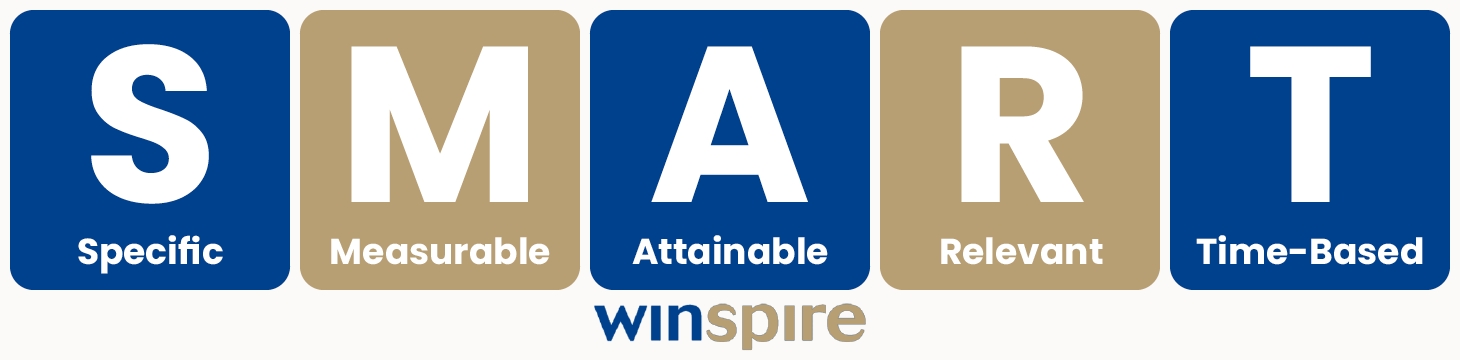
- Specific about what you hope to achieve.
- Measurable so you can know whether you’ve accomplished your goal.
- Attainable to ensure the goal is within reach for your team.
- Relevant to your organization’s mission and priorities.
- Time-based, meaning they have a stated deadline.
An example of an auction fundraiser goal that follows the SMART method might be “to register 50 first-time supporters and raise at least $20,000 for our mission by the end of our silent auction.”
This goal is specific about what the event is meant to accomplish—acquiring new supporters and bringing in revenue for the nonprofit’s mission—which are presumably aligned with the organization’s overarching priorities. Each objective also has a numeric metric and a deadline (the end of the auction) attached.
To determine whether this goal is attainable, the event team can review data from their past fundraisers. If they acquired 40 supporters and raised $18,000 at last year’s silent auction, they might decide that 50 new participants and $20,000 are just enough to push them while remaining within the realm of possibility.
3. Confirm Your Fundraiser’s Logistics
After setting your goals, you’ll need to work through the basic details of how you plan to accomplish them. This involves finalizing your auction’s:
- Date and time: The sooner you can get your event on supporters’ calendars, the better for encouraging signups.
- Location: This might look like reserving a venue for an in-person auction, investing in a fundraising platform for a virtual event, or both for a hybrid auction.
- Staffing: Delegate planning and hosting responsibilities to the team members who have the skills and bandwidth to take them on, and determine where you’ll need volunteer support to fill in the gaps.
- Companion fundraisers: Auctions pair well with a variety of other revenue-generating activities, from raffles to galas to golf tournaments. If you go this route, make sure to take the logistics of all fundraisers into account as you plan.
- Budget: Decide how much you can spend up front on your auction and what funding you’ll use to cover those costs. Fundraising expenses are considered overhead, so make sure to pay for them with revenue that isn’t designated for specific programs or projects and avoid unnecessary overspending.
Auctions make great annual events, and if you go that route, your logistical planning will get easier every year. You’ll find your favorite software and venues, understand how much work your staff and volunteers can realistically take on to run your event, and maximize your budget. Plus, if you host your auction at the same time each year, loyal supporters will also know to keep the last Friday night in April or the second Saturday of November free so they can participate.

4. Develop a Corporate Sponsorship Strategy
Corporate sponsors can be a lifesaver when it comes to running an auction on a limited budget. Some companies will provide direct financial support, while others might choose to contribute low- or no-cost auction items or event services (e.g., reduced-price sound equipment rentals or free catering).
To create a strong corporate sponsorship strategy for your auction, make sure to:
- Consider what businesses your organization may have existing connections with and what local companies share similar values to yours, since they’ll be easier to persuade in most cases.
- Assign a point of contact to each potential sponsor—although this is usually an employee, you could also send in a board member who knows the business owner or a volunteer who works there if you have one.
- Approach sponsors with specific asks that they could feasibly fulfill, but have backup ideas in mind in case they turn down your initial request (e.g., if a restaurant doesn’t want to cater your event pro bono, they could also donate a gift card as an auction item).
- Let the potential sponsor know what’s in it for them if they contribute to your event, which is usually free publicity via your fundraising and marketing materials.
By following these tips, you can set your organization up to enter into long-term partnerships that benefit you and your sponsors far beyond this one auction.
5. Procure Charity Auction Items
The most involved part of planning an auction is the item procurement stage. For live auctions, the main challenge is finding the most valuable prizes at the lowest possible cost. For silent auctions, it’s securing a broad range of items while ensuring each one is creative enough to catch participants’ attention.
Although you should tailor your prize selection to your supporters’ unique interests, here are the top categories of charity auction items to jumpstart your brainstorming:
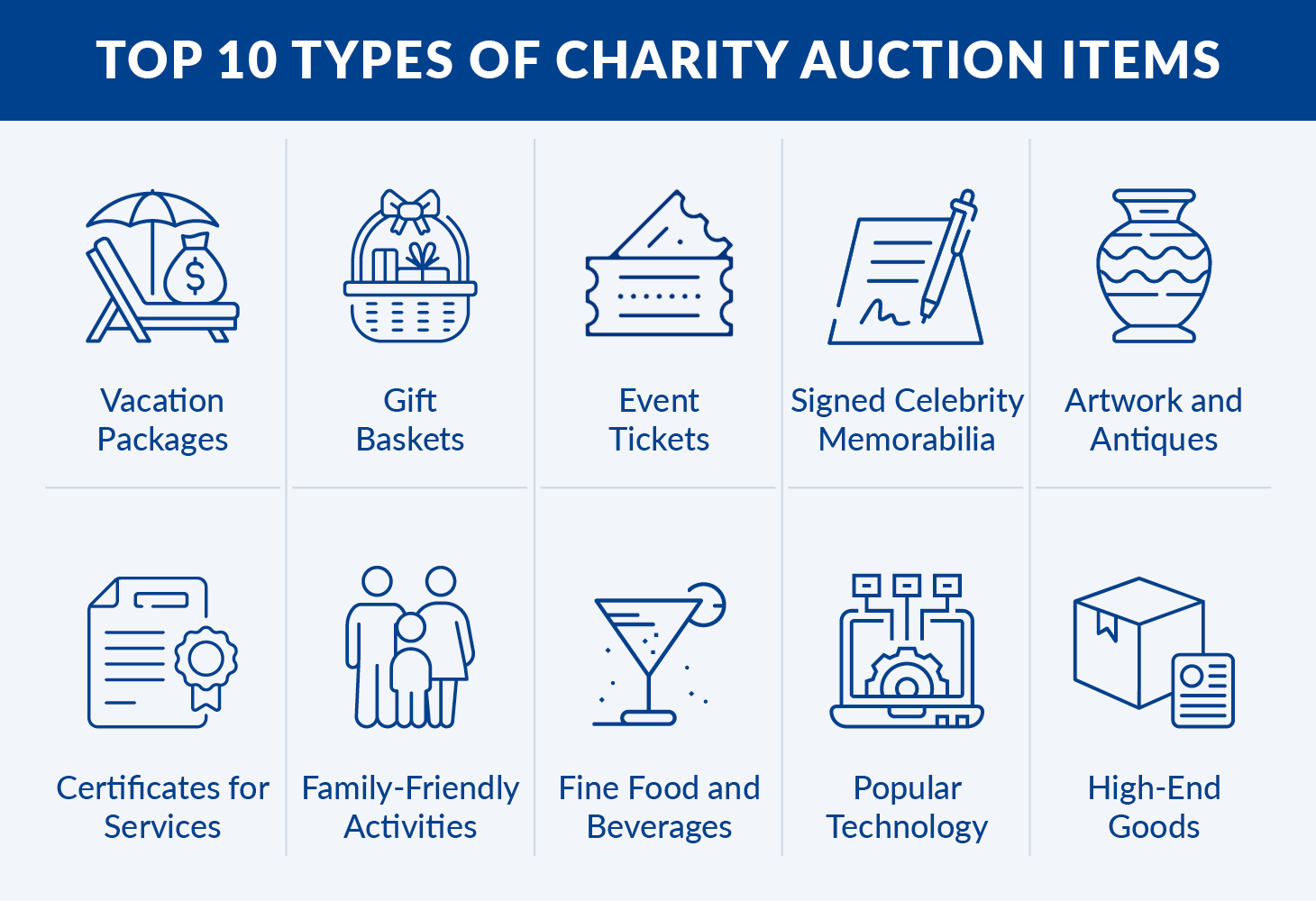
- Vacation packages that include transportation, accommodations, and activities at the destination.
- Gift baskets constructed around cohesive themes.
- Event tickets for concerts, musicals, sports, or other similar experiences.
- Signed celebrity memorabilia from artists, actors, or athletes your audience is familiar with.
- Artwork and antiques, especially if they’re specific to your local area.
- Certificates for services, which can range from spa treatments to pet-sitting to interior decorating.
- Family-friendly activities such as amusement park passes, children’s museum memberships, or popular kids’ toys.
- Fine food and beverages to appeal to supporters who would rather purchase consumables than permanent items.
- Popular technology like new smartphones, video game consoles, or cameras.
- High-end goods such as designer purses, jewelry, or trendy kitchen appliances (e.g., air fryers and ice cream makers).
Your organization will likely be able to procure many of these items by leveraging nonprofit discounts or requesting in-kind donations from sponsors and individual donors. The one exception is vacation packages, which are easiest to secure by going through consignment travel providers like Winspire.
Explore Auction Item Procurement With Winspire
Winspire curates and sells bucket-list travel packages (known as Experiences) specifically for use in nonprofit fundraising events. Your organization can get started with Winspire in four easy steps:

- Select the Experiences you want. If you have any questions about which vacation packages would interest your specific audience, our Event Fundraising Specialists are happy to help.
- Promote them to your supporters. Winspire provides photos and descriptions of each Experience that you can include in your marketing materials to make promotion easy (more on this later!).
- Offer them at your event. You can award each Experience more than once (e.g., during your auction and in an accompanying raffle), and every dollar you raise above the Nonprofit Cost (list price) goes directly to your mission.
- Winners redeem their packages. After the auction, all you have to do is provide vouchers to each winning bidder, who will book their travels through Winspire with no additional work required on your nonprofit’s end.
Winspire’s no-risk model also means you only pay for the Experiences you sell. However, these packages are pretty popular—since our founding in 2008, we’ve helped nonprofits across North America raise more than $110 million for their missions!
6. Market Your Fundraiser
In many ways, marketing an auction is similar to promoting other fundraising events or campaigns. For example, it’s still important to consistently incorporate your nonprofit’s branding to create a professional, recognizable look across your communications and include a link or QR code to your registration form in every message so audiences can sign up right away.
Additionally, multi-channel marketing creates more touchpoints for potential participants to find out about your auction. Some channels you might use include:
- The Events page and calendar on your nonprofit’s website
- Email blasts and newsletter mentions
- Social media posts on Facebook, Instagram, LinkedIn, TikTok, and other platforms
- Paid digital ads on social media or search engines
- Text messages to send quick reminders about deadlines and event dates
- Print communications such as flyers and direct mail
When marketing your auction, ensure your items are the star of the show. Include photos of your most appealing prizes (or related images like window cards for concerts you’re auctioning off tickets to) across all channels so participants arrive at your event excited to bid!
7. Create Bidding Materials
Marketing isn’t the only task that will involve some DIY graphic design in the lead-up to your auction. You’ll also need to create branded supplies that facilitate the bidding process by displaying the available items and allow supporters to actually place bids.
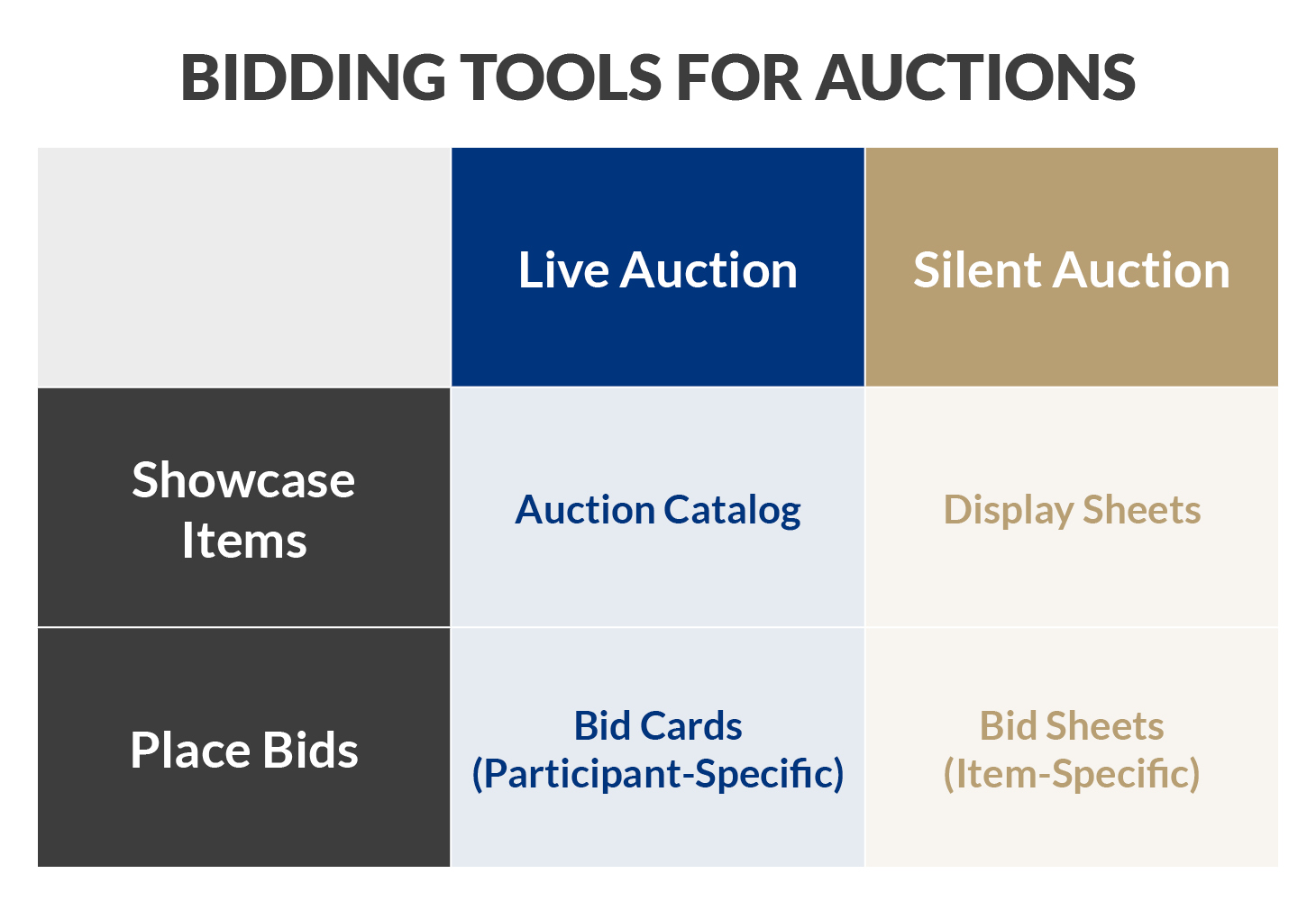
For live auctions, your bidding materials will be specific to each individual participant but cover all of the available items. At check-in, give supporters either a physical copy of your auction catalog (which should contain descriptions of every prize along with serving as an event program) or access to a digital version, plus a numbered bid card that they’ll have to raise for their bids to count as valid.
By contrast, silent auction bidding materials are item-specific but used by all event participants. Each prize should have its own display sheet with eye-catching photos and a detailed but skimmable description of the item, plus a bid sheet for supporters to write down their bids.
If your auction is virtual, you might create a catalog inside your auction software where supporters can access mobile bidding directly from each entry. No matter how you design these materials, ensure they make the bidding process easy and exciting.
8. Host the Auction
The day of your auction is when all of your hard work pays off. However, there are still a few things you’ll need to do to make sure the event runs smoothly, including:
- Arriving at the venue early to ensure everything is ready to go, or logging into your fundraising software well before the auction to check that all features are working.
- Meeting with your event team and volunteers to confirm that everyone understands their responsibilities.
- Welcoming participants via a speech or livestream to set the tone for the event.
- Making sure the bidding starts and ends on time and that all winning bidders claim their prizes afterward.
For in-person or hybrid auctions, you should also spend some time mingling with participants, whether that’s during a period of socialization before the live auction starts or as they’re browsing your silent auction items. Doing so helps humanize your organization and deepen your relationships with individual supporters.
9. Send Follow-Up Messages
Once your auction ends, your work isn’t quite finished. To continue building relationships with participants, follow up with them within 48 hours of the event (Pro tip: Creating a thank-you note template before your auction will help you get your messages out faster!). Share your final fundraising total, share how you plan to use that revenue to further your mission, and express your gratitude for their support.
Don’t forget to also thank your volunteers and sponsors for making your auction possible! Along with your thank-you letter, consider sending your volunteers a piece of branded merchandise as an extra token of appreciation for their time. For sponsors, a handwritten note, phone call, or small gift shows that you value their partnership more than a basic email would.
10. Evaluate Your Fundraising Success
Before your auction, set up your fundraising software or CRM to collect data that will help you determine if you achieved your goals. Then, you can evaluate your success afterward by reviewing metrics like:
- Revenue totals for the event as a whole and its component parts (ticketing, item sales, additional donations, companion fundraisers, etc.).
- Return on investment (ROI), or the amount of revenue raised per dollar spent up front.
- Item sale metrics, such as which items received the most bids and the number of prizes that sold at or above their fair market value.
- Donor acquisition and retention rates, which tell you how many first-time supporters attended your auction and how many participants returned from one event to the next.
- Marketing conversion rates—i.e., registrations that came from each channel or individual message.
- Participant satisfaction, which you can gauge by sending out a survey after the event asking supporters what they enjoyed about your auction and where they see room for improvement.
In addition to showing whether you achieved your goals for this event, these metrics can inform your planning process for future auctions so you can capitalize on your strengths and address any areas where your strategy might be lacking. For example, you might create more content for the marketing channels that drove the most conversions or develop more detailed follow-up strategies to increase supporter retention.
Wrapping Up: Additional Resources on Nonprofit Auctions
Above all else, the key to successfully planning an auction for your nonprofit is to start early. As soon as you finish following up and reviewing your data from this year’s auction, it’ll be time to start planning for next year! Keep following the steps above and adjusting for your organization’s needs, and don’t hesitate to reach out for expert help if you need it.
For more information on nonprofit auctions, check out these resources:
- How to Price Silent Auction Items: The Ultimate Guide. Explore the best auction item pricing strategies to help your organization achieve its event revenue goals.
- How to Write a Silent Auction Item Description + Template. Learn how to describe your prizes to ensure you provide all necessary information while piquing supporters’ interest.
- The Ultimate List of 150+ Silent Auction Item Ideas. Discover more specific ideas for prizes to feature in your auction so you can tailor your offerings to your audience.


Jason Champion – Vice President of National Accounts at Winspire
Jason Champion is the Vice President of National Partnerships at Winspire, a global provider of bucket-list vacation experiences for charity auctions and fundraisers. He is responsible for overseeing and managing relationships with major clients and partners across the country, which involves developing and executing strategic plans to drive revenue growth, expand market share, and ensure client satisfaction. Jason also collaborates closely with Winspire team members in sales, marketing, and other relevant departments to align business objectives with customer needs.
