If you’ve ever planned a silent auction for your nonprofit, you’ve probably heard that the items you procure can make or break your event’s fundraising success. What isn’t talked about as often is the impact that displaying those prizes can have on participant engagement and revenue generation. The way you show off your silent auction items shapes supporters’ first impressions, which affects whether and how much they want to bid.
In this guide, you’ll learn all you need to know about a core component of prize displays—silent auction tables. We’ll cover:
- Silent Auction Tables FAQ
- Silent Auction Table Setup Best Practices
- How to Find Items for Your Silent Auction Tables
Let’s get started by making sure we’re on the same page about why silent auction tables (and their digital equivalents during online auctions) matter.

Silent Auction Tables: Frequently Asked Questions
What are silent auction tables?
As the name suggests, silent auction tables are the physical displays your nonprofit uses to show off the items up for bid during this type of fundraising event. While many organizations display silent auction prizes on literal tables, your “tables” could also include risers, unique shelving systems, or entirely digital setups if you’re hosting a virtual auction (more on this later!).
However you set up your silent auction, your table design should aim to turn your fundraiser into a shopping experience that effectively draws attention to valuable, appealing prizes. This way, participants can leave your event with positive memories, items they’re excited to use or experience, and the knowledge that they just had a good time for a good cause.
Why is silent auction table setup important?
Besides boosting supporter engagement through a memorable shopping experience, effective silent auction tables have the ability to:
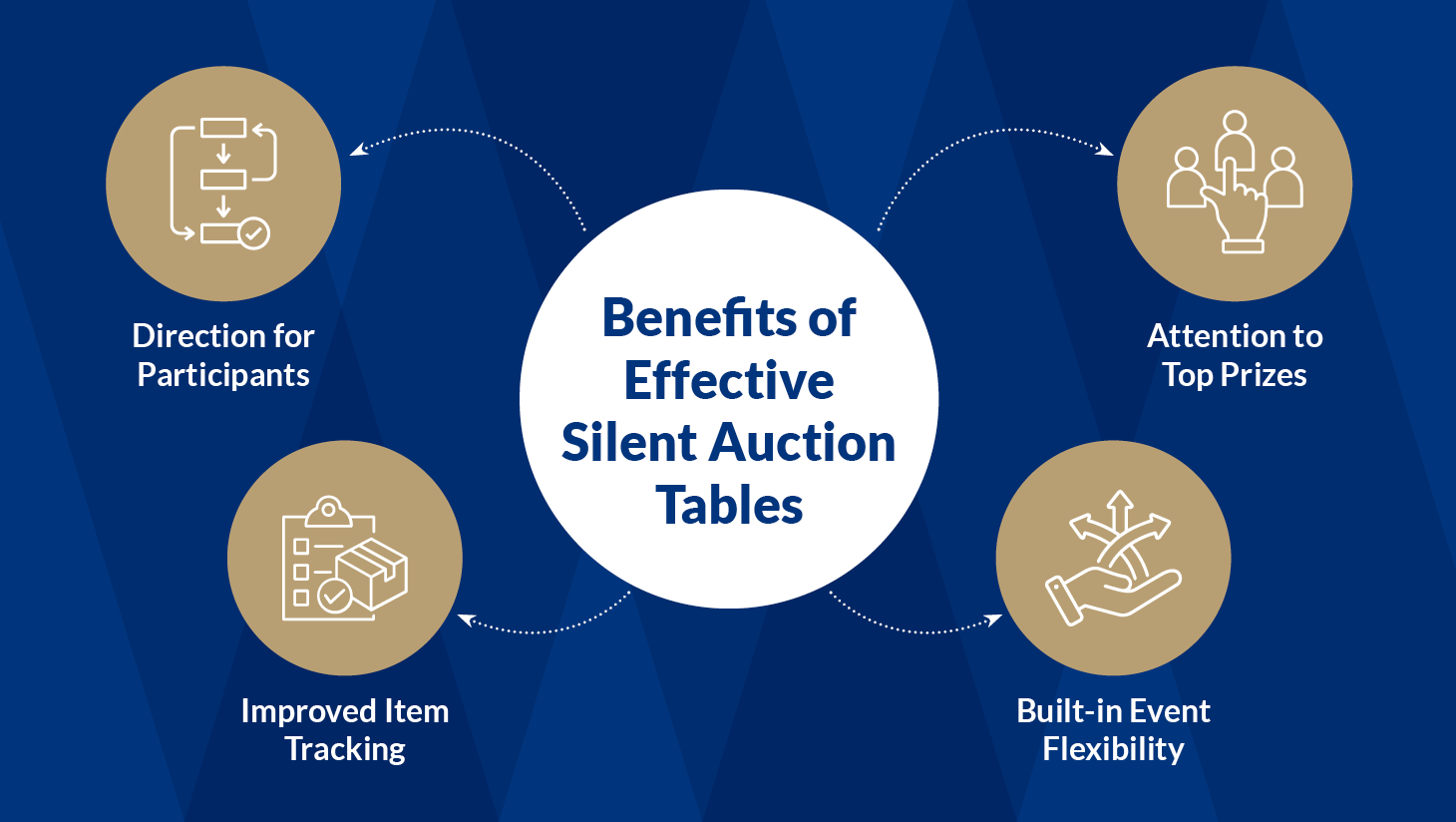
- Provide direction for participants so that traffic flows smoothly through your auction.
- Draw extra attention to top prizes that you visually highlight in your displays.
- Build flexibility into your event, since you can choose to open and close different tables at different times if you’d like.
- Improve item tracking by providing a natural system for prize numbering and keeping everything in its place.
Naturally, your nonprofit will see these benefits more clearly if you set up your tables to cater to your specific audience and event venue. If you do, you’ll not only increase event engagement but also bring in more funding by prompting higher bids and selling more items!
How do I create a shopping experience using virtual “tables?”
As virtual auctions have increased in popularity, many nonprofits have wondered how to translate their in-person tables into an online space. Fortunately, silent auction platforms often have built-in features that allow your organization to create a similarly engaging shopping experience within their software, such as:
- Item catalogs and listing pages where you can display professional-looking photos and important details about each prize.
- Automatic, personalized notifications that let bidders know about items they might be interested in, when they’ve been outbid, and whether they’ve won a prize.
- Livestreaming features to bring supporters together at specific times during your auction, almost like you would during an in-person event.
Although the remaining tips in this guide will focus on in-person silent auction table setup, keep these digital features in mind if you plan a virtual auction (or a hybrid one, since you’ll need both virtual shopping capabilities and in-person tables in that case) so you can choose the right tool and leverage its functionality to the fullest.
Silent Auction Table Setup Best Practices
Now that you’ve gotten the lay of the land, let’s dive into the essential elements of a silent auction table and how to curate yours successfully.
Position Silent Auction Tables Strategically
Silent auctions can be held almost anywhere, from a hotel ballroom to a museum atrium to a corner of a park where you’re simultaneously hosting a charity race. Every venue will have a different amount of space and different layout possibilities for your tables. No matter where your tables are, make sure to:
- Place them in a central location to make browsing easier and draw attention to them, especially if your silent auction is the main focus of your event rather than a supplement to another fundraiser.
- Space tables well apart—three feet is about the minimum amount of space you can leave between tables for comfortable browsing, but it’s even better to aim for five to seven feet of space for accessibility purposes.
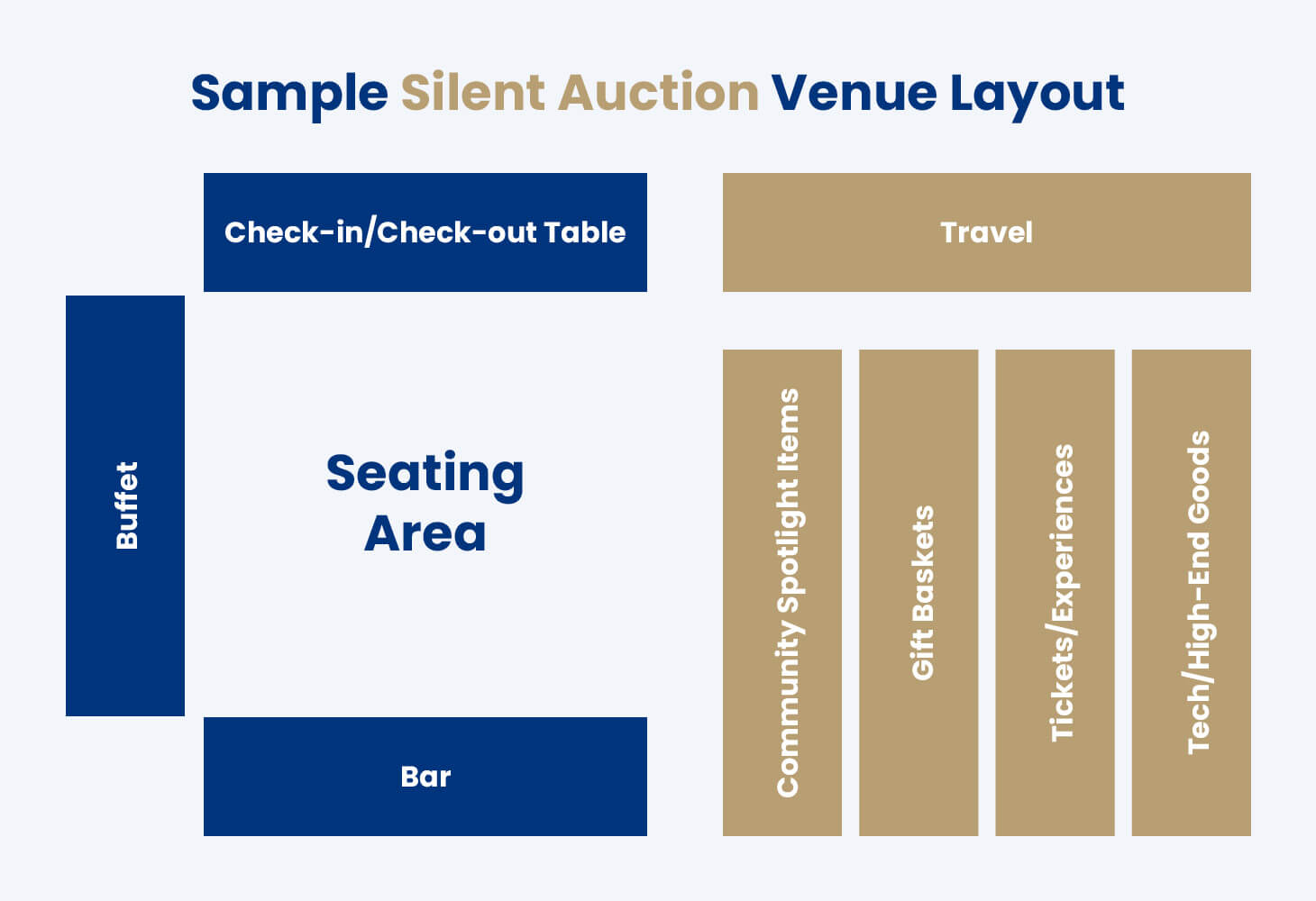
- Allow for easy navigation around other event elements, such as your check-in and check-out tables, refreshments, seating areas, sound equipment, and accompanying activities.
- Check the lighting in the area you choose so your setup is bright enough (but not too bright) for participants to see items clearly and read supplementary information easily as they browse.
To help you get an idea of what your table placement might look like, check out the sample map below. Once you secure a venue for your event, it’s helpful to sketch out a similar map that aligns with the dimensions you’re working with.
Organize Items by Category
Think about the last time you went to a grocery store you’d never been to before. You probably found that the store’s organization made your shopping trip more efficient, since you knew that flour would be in the baking aisle, apples would be in the produce section, and milk would be in the dairy-product refrigerators. The same principle applies to silent auction items: If you put related items on the same tables, supporters will move through your setup and find the prizes they want to bid on more efficiently.
As a starting point for your table organization system, you might look to Winspire’s list of the top 10 categories of charity auction items, which include:
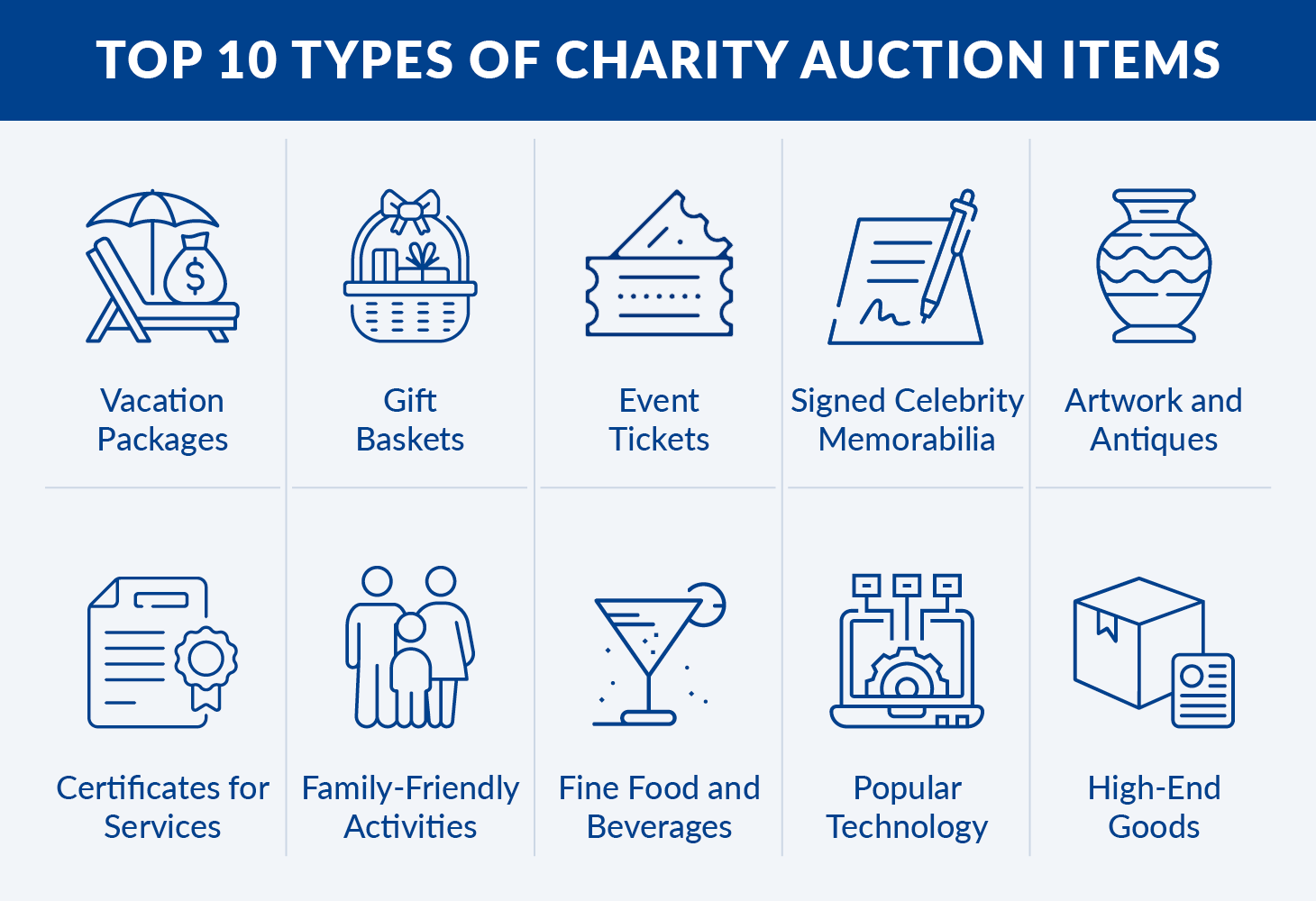
- Vacation packages that feature accommodations and activities in bucket-list destinations.
- Gift baskets with cohesive themes, which are generally more valuable than the sum of their parts when sold as a unit.
- Event tickets for popular concerts, musicals, athletic events, or other similar experiences.
- Signed celebrity memorabilia that has been verified as legitimate and appeals to your target audience’s interests.
- Artwork and antiques, especially locally made pieces with intriguing backstories.
- Certificates for services, which can range from spa treatments to interior design to pet-sitting or boarding.
- Family-friendly activities to appeal to participants with young children or grandchildren.
- Fine food and beverages for supporters who prefer to bid on consumables rather than tangible items.
- Popular technology like video game systems, fitness trackers, or even new smartphones.
- High-end goods such as designer purses, jewelry, or trending kitchen appliances.
In a 2025 survey of nonprofit auction participants, respondents reported bidding most frequently on gift cards (33%), dining and culinary items (32%), and vacation packages (26%). These results underscore the importance of offering a wide variety of auction items at different price points, although it’s helpful to place higher-value items near the ends of your tables to draw attention to them.
Catch Participants’ Attention With Items or Photos
Nonprofits often put physical silent auction items directly on their event tables, especially gift baskets or other eye-catching prizes. However, some items don’t sit well on a table, whether they’re too large to fit, too small or expensive to be left lying around without continuous supervision, at risk of spoiling or melting, or don’t have any physical components to display (like a vacation).
This is where well-designed display sheets come in. Display sheets can feature multiple high-quality photos of your items or the experiences their winning bidders will have, such as beautiful views from a vacation package’s destination or popular dishes at a restaurant you’re auctioning off a gift card to, to draw participants in and encourage bidding. When creating your display sheets, make sure to balance out your photos with white space and informative text for a more effective final look.
Unify Displays & Bid Sheets
As you create your display sheets, make sure they align with the bid sheets for your silent auction prizes. Since display and bid sheets will be paired for each item, they should look like a set, containing the same:
- Organizational branding, including your nonprofit’s logo, color scheme, fonts, and tagline or mission statement.
- Item title, which should be large, bold, and creative (to the last point, if you were attending your auction, would you rather bid on a “Basket of Spices and Cooking Utensils” or a “Home Chef Starter Kit”?).
- Baseline description that details everything a winning bidder will receive and any restrictions on an item’s use in a skimmable format.
- Provider or sponsor acknowledgment to thank the individual or business who contributed the prize.
You might include more details in your display sheet item descriptions than on your bid sheets to make more room for bidding rows, but the basic points should match (e.g., if a vacation has to be taken by a specific date, that date should be identical on both sheets). Additionally, if your bid and display sheets visually coordinate with the other decorations on your tables, it’ll create a more unified ambiance throughout your venue.
How to Find Items for Your Silent Auction Tables
Once you start planning out your silent auction tables, it’s easy to get wrapped up in creating aesthetically pleasing displays and neglect the real stars of the show—your items. To create a truly memorable shopping experience, your prizes should be unique (i.e., not easy to find in retail stores), span a range of audience interests, and have relatively low upfront costs to increase the impact of your participants’ contributions on your nonprofit’s mission.
The three primary auction item procurement methods include:
- In-kind donations from individuals and businesses, which are best for securing physical goods and gift cards.
- Nonprofit discounts, which should be your go-to for ticketed experiences and a backup method you can propose to corporate sponsors if they don’t agree to an in-kind gift.
- Consignment, which is typically the easiest and most cost-effective way to secure vacation packages.
To test your knowledge of these procurement methods, take the quick quiz below!
If you’re looking for a consignment provider for travel-related silent auction items, you’ve come to the right place! Although we love giving event planning advice and creating fundraising resources here at Winspire, our primary mission is to curate bucket-list vacation packages (known as Experiences) specifically for nonprofit auctions and raffles.
Our team will be there for you every step of the way, from helping you select the right Experiences for your supporter base to providing display sheet photos and booking winning bidders’ travels for them after your event. You can award each package to more than one winner, all proceeds above the Nonprofit Cost (list price) go directly to your mission, and our model is 100% risk-free because you only pay for what you sell. Since Winspire’s founding in 2008, we’ve helped nonprofits like yours raise more than $110 million for their causes!
Wrapping Up: Additional Auction Setup Resources
The tips above should provide your nonprofit with a solid foundation for creating effective silent auction tables during your next event. After your auction, assess which items got the most bids and where they were placed, and survey participants to see what they thought of your setup. Then, use both of those information sources to fine-tune your approach for your next event to further increase revenue and engagement.
For more information on auction planning and setup, check out these resources:
- How to Design a Silent Auction Bid Sheet: Tips + Template. Dive deeper into the qualities of an effective silent auction bid sheet so you can further hone your designs.
- How to Plan an Auction Fundraiser in 10 Simple Steps. Explore the high-level process of planning an auction and discover how table setup fits into that bigger picture.
- Design Your Own Charity Auction Catalog + Template. If you’re hosting a live auction in addition to or instead of a silent one, learn how to display your prizes in a helpful catalog.


Jason Champion – Vice President of National Accounts at Winspire
Jason Champion is the Vice President of National Partnerships at Winspire, a global provider of bucket-list vacation experiences for charity auctions and fundraisers. He is responsible for overseeing and managing relationships with major clients and partners across the country, which involves developing and executing strategic plans to drive revenue growth, expand market share, and ensure client satisfaction. Jason also collaborates closely with Winspire team members in sales, marketing, and other relevant departments to align business objectives with customer needs.